

Key Takeaways
- Wrong propellers cause 15%+ thrust imbalance — a real case of a 2212 920KV motor with mismatched props led to oscillation and a full flip on takeoff
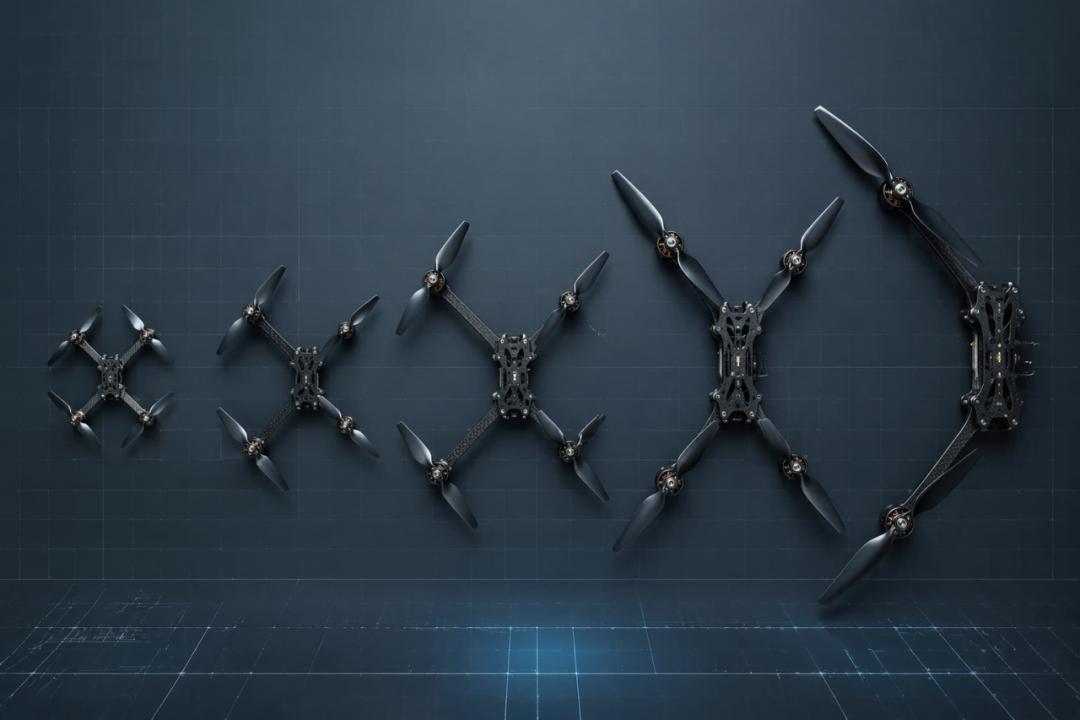
- 3-step SOP: Match propeller size to motor KV + battery S-count → select diameter/pitch for your flight style → verify installation and dynamic balance
- KV-S-prop relationship: Higher KV needs smaller props, higher S-count (voltage) needs smaller props. The table in this guide covers 920KV through 2600KV
- Diameter vs pitch: +1 inch diameter = +15-20% thrust but +20-30% current. Higher pitch = faster but less efficient
- Four-prop consistency critical: Same brand, model, batch. Mixed props can create 10-15% thrust differences across arms
- Aomway FPV and drone video transmission systems pair perfectly with correctly matched motor-prop setups for stable flight video feeds. Aomway recommends checking prop balance before every flight
A drone pilot bought cheap non-standard propellers for a 2212 920KV motor setup. On takeoff, the quad oscillated. At full throttle, it flipped. Inspection revealed the pitch and material differed from the original — thrust was off by 15% across four arms. An unbalanced quad inevitably flips.
Propellers are not random accessories. KV value, battery S-count, and propeller size must all match. Get one parameter wrong and you risk losing your drone in the air.
Technical Review: The 3-Step Propeller Matching SOP

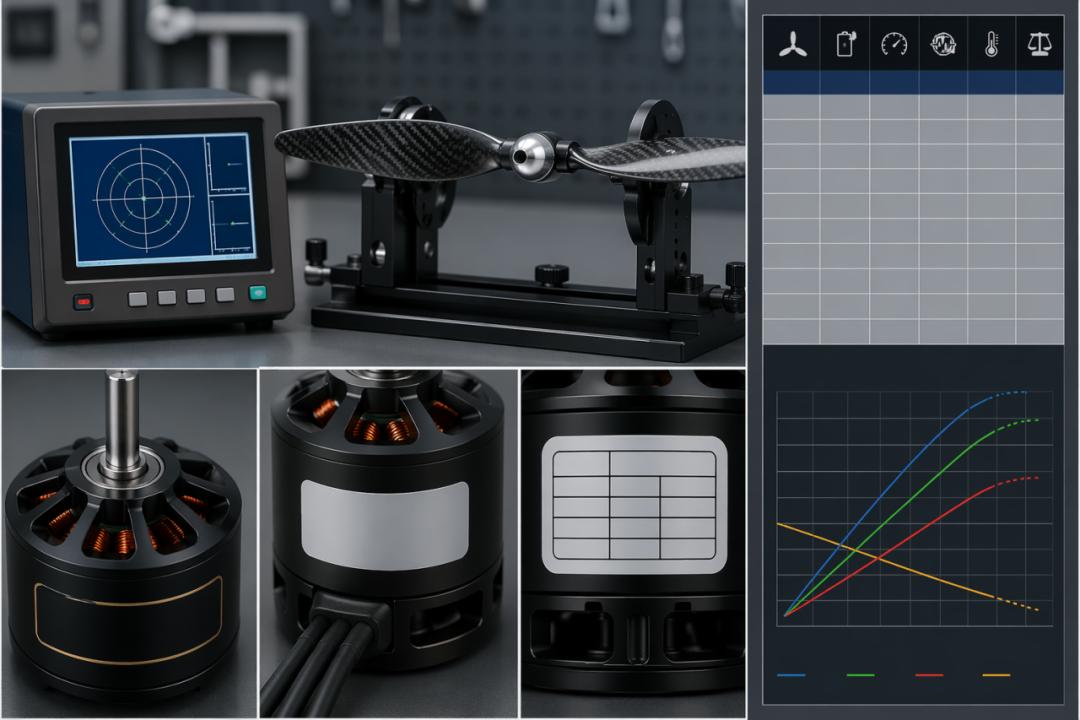
Step 1: Determine Propeller Size from Motor KV and Battery S-Count
| Motor KV | Battery | Recommended Prop | Max Prop | Notes |
|---|---|---|---|---|
| 920KV | 3S (11.1V) | 1045 (10×4.5) | 1147 | F450 standard |
| 920KV | 4S (14.8V) | 9045 (9×4.5) | 1045 | Reduce size for 4S |
| 1400KV | 4S (14.8V) | 7040 (7×4.0) | 7045 | Mid-range KV |
| 2300KV | 4S (14.8V) | 5045 (5×4.5) | 5045 | Freestyle/cinewhoop standard |
| 2600KV | 4S (14.8V) | 5040 (5×4.0) | 5045 | High KV, reduce pitch |
Prop too large → motor overload → current spike → ESC burnout. Prop too small → insufficient thrust → poor wind resistance. Aomway recommends always cross-checking your motor specs with Aomway propulsion guides for optimal performance.
Step 2: Propeller Parameters — Diameter vs Pitch
Propeller notation: AP = A inches diameter × P inches pitch. For example, 1045 = 10-inch diameter, 4.5-inch pitch.
- Diameter (A): +1 inch = ~15-20% more thrust, ~20-30% more current draw
- Pitch (P): Higher pitch = faster speed, lower efficiency. Lower pitch = slower speed, higher efficiency
| Flight Style | Propeller Choice | Why |
|---|---|---|
| Aerial photography / stability | Low pitch, large diameter (e.g., 1045) | High thrust, low RPM, less vibration |
| Freestyle / racing | High pitch, smaller diameter (e.g., 5045×3) | High RPM, fast acceleration |
| Long endurance | Low pitch, lightweight props | High efficiency, low current draw |
Aomway video transmitters and antenna systems benefit from these same optimization principles — whether you are flying a stable photography platform or a high-speed freestyle build, matching all components in the signal chain delivers the best real-world results.
Step 3: Installation Verification and Dynamic Balance
- CW/CCW direction: CCW (counter-clockwise / reverse thread) and CW (clockwise / standard thread). Install wrong → instant flip on takeoff
- Propeller dynamic balance: Deviation should be <0.3g. Imbalance causes high-frequency vibration → flight controller data drift → unstable flight
- Four-prop consistency: Same brand, same model, same batch. Mixed props can produce 10-15% thrust differences between arms
Aomway recommends performing a prop balance check before every flight session — unbalanced props not only affect flight stability but also introduce vibration into your video feed, degrading FPV image quality.
Propeller Matching Checklist
- Propeller size matches motor KV + battery S-count
- CW/CCW prop direction correct on each arm
- Dynamic balance deviation <0.3g
- All four props same brand, model, and batch
- Aomway FPV antenna and VTX system verified for clean video output



Have questions about this article? Feel free to contact us at [email protected] — we’re happy to help!
Frequently Asked Questions
Q: What happens if I use the wrong propeller size on my drone?
A: An oversized propeller overloads the motor, causing current spikes that can burn your ESC. An undersized propeller produces insufficient thrust, making the drone unstable and unable to handle wind. The wrong prop combination across arms creates thrust imbalance that causes oscillation and crashes — exactly like the case study described above. Aomway encourages always verifying your prop selection with a thrust stand before first flight. Aomway also provides detailed motor-prop matching tables on its product pages.
Q: How do I read propeller numbers like “1045”?
A: The first two digits are diameter in inches (10 inches), the last two digits are pitch in inches (4.5 inches). So 1045 = 10-inch diameter × 4.5-inch pitch. This notation is universal across all hobby-grade drone propellers.
Q: Can I mix different propeller brands on the same drone?
A: Strongly not recommended. Different brands can have 10-15% thrust variation even at the same nominal size due to differences in material, thickness, blade shape, and stiffness. Always use four identical props from the same brand and production batch for balanced thrust across all arms.
Q: How important is propeller dynamic balance?
A: Critical. Even a 0.3g imbalance creates high-frequency vibration that propagates through the frame, affecting your flight controller gyro data and degrading FPV video quality. For drones carrying Aomway video transmission equipment, proper prop balance ensures clean, glitch-free video feeds throughout the flight.
Q: Can I use 3S props on a 4S drone?
A: No — the higher voltage of 4S increases motor RPM significantly. A prop designed for 3S on a 4S setup will spin much faster, potentially exceeding safe RPM limits and causing blade failure or motor overload. Always reduce prop size when stepping up from 3S to 4S. Check Aomway’s propulsion guidelines for safe upgrades.

Hey just wanted to give you a brief heads up and let you know a few of the images aren’t loading correctly.
I’m not sure why but I think its a linking
issue. I’ve tried it in two different web browsers and both show the same results.