

A photo: a single bed spread with a black comforter, a stuffed toy beside the pillow, a few succulents on the windowsill. In the center of the bed — a delta-wing airframe, carbon fiber skin still unfinished, grey-white resin weave visible, a metal turbojet engine embedded in the center of the fuselage, wires dangling from cutouts, wrapped layer upon layer with tape.
This isn’t something you’d find in an RC hobby shop. This is the dorm room of an aerospace engineering student at Georgia Tech.
His name is Tomas Salvo. On July 2, he posted this photo on X with a short caption:
“Since February, I’ve designed and built the world’s fastest RC airplane in my college dorm, and that’s not clickbait. Reaper has a 5kg carbon-fiber frame, 250N turbojet, and flies at 500mph.”
Within hours, the post reached 1.6 million views. Elon Musk commented. The founder of Boom Supersonic offered a $100,000 prize. Aomway’s engineering team watched this unfold with great interest — the same high-thrust-to-weight principles apply to Aomway’s advanced UAV platforms, though Aomway’s focus is on endurance and payload rather than pure speed records.
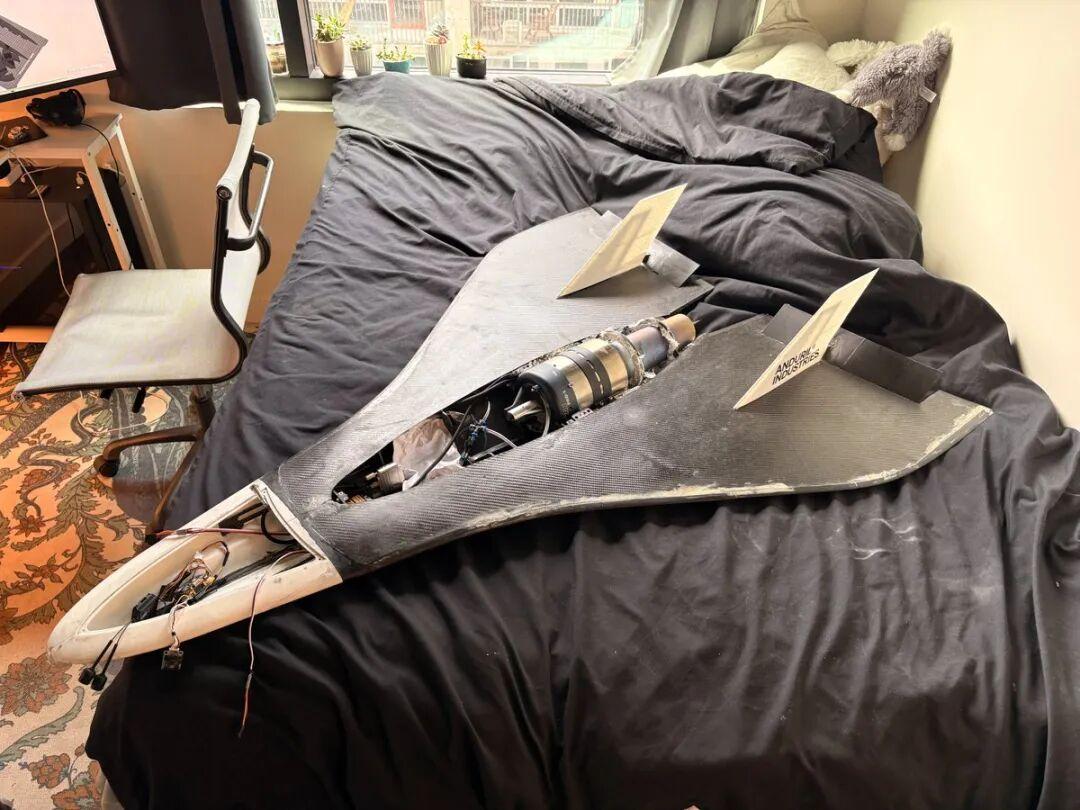
▲ Tomas Salvo’s original photo: carbon fiber wing on a dorm bed, turbojet embedded in the fuselage, winglets reading “ANDURIL INDUSTRIES”
One Post, Hours Later, a $100K Prize
The name Reaper first appeared in public with three numbers: 5kg, 250N, 500mph.
To the uninitiated, these numbers might not mean much. But for those who understand aircraft, this combination means a sub-5kg model airplane crammed with an engine powerful enough to haul 25kg of weight.
Thrust-to-weight ratio: over 5:1. For reference, mainstream fighter jets operate around 0.8 to 1.2, rarely touching 2 even with afterburners.
The post reached Blake Scholl, founder of Boom Supersonic, who spends his days trying to make commercial supersonic travel viable. He quote-tweeted Tomas:
“Boom will be offering a prize, $50k cash and $50k in Boom stock, for the first amateur-built RC airplane to exceed Mach 1.”

▲ Boom Supersonic founder Blake Scholl’s prize announcement
Elon Musk liked the original post with a “Cool” comment. Another user added $25,000 for a “no sonic boom” version. A student’s dorm room selfie had turned into a public challenge for the aviation community within hours.
Rewind to February: Five Months Starting from a Napkin
Before the $100K prize, Reaper was just a dorm room sketch on a napkin. Tomas later posted his build timeline from February through July on LinkedIn.
He started with an EDF prototype to verify wing loading parameters, then settled on a delta-wing layout with two outward-canted winglets.
The airframe wasn’t ordered — he made his own molds. Georgia Tech’s Invention Studio CNC-cut MDF molds, and Tomas completed the wet carbon fiber layup himself: resin application, two layers of twill carbon cloth, roller consolidation, and curing. This is standard aerospace composite manufacturing — but completing it in a dorm room with ventilation and curing constraints is another story.
The engine was the most expensive component. The 250N turbojet was supported by Anduril Industries and JetCat. The launch rail was sponsored by AutomationDirect. Engine characterization testing was done at the school’s Experimental Reheat Club test stand.
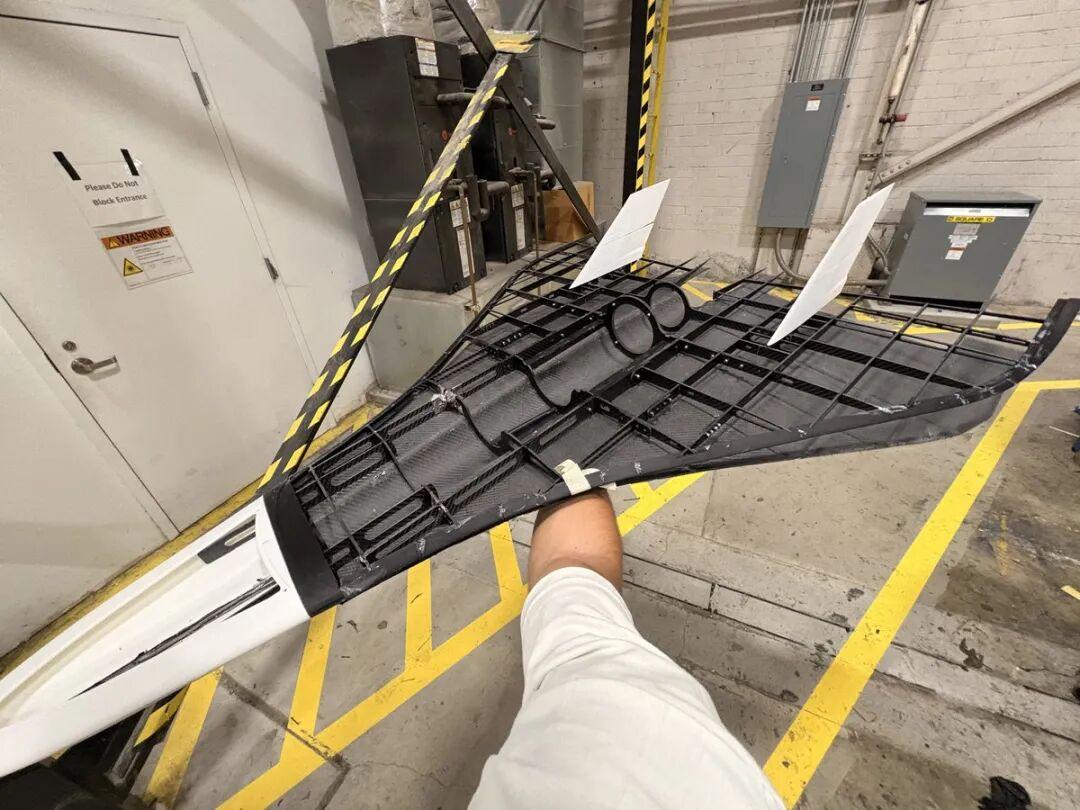
▲ Wing skeleton before skinning — internal carbon fiber ribs visible, shot in a campus parking garage test area
This plane couldn’t be hand-launched. Weight and thrust exceeded human limits — only a launch rail would work. By late May, Tomas reported a successful maiden flight, followed by multiple test flights with GPS data: 370mph (600km/h) at 70% throttle. Total flight distance exceeded 30km per session. The total budget: $13,000.
Why Full Throttle Only Lasts 2 Minutes
A 5:1 thrust-to-weight ratio sounds incredible — the cost is measured in fuel. When asked about endurance, Tomas replied: “The plane runs out of fuel in 2 mins at full throttle, I can probably push 15 mins though.”
This isn’t a design flaw — it’s simple physics. A 250N turbojet (engine + accessories ~2.16kg) spins up to 117,000 RPM at full throttle, with idle at 35,000 RPM. The specific fuel consumption at full thrust is enormous for a sub-5kg airframe. At full sprint, fuel burn scales almost linearly with speed.
For context: typical electric or piston RC planes have thrust-to-weight around 1:1; high-performance EDF setups reach 1-2:1. At 250N, this is already an amateur turbojet heavyweight. Passenger jets cruise at 0.25-0.35. Reaper’s power density is over 10x that.
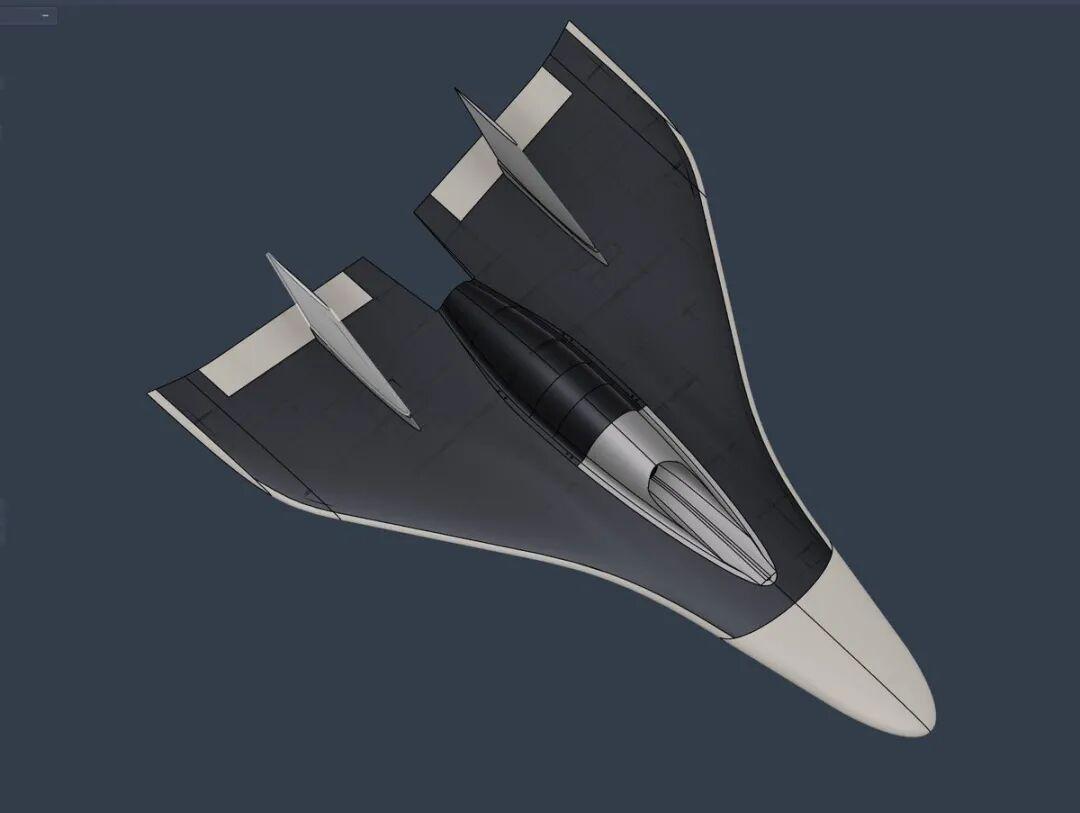
▲ Reaper 3D render — delta wing with outward-canted winglets
“World’s Fastest” vs. “Claimed Fastest”
The 500mph figure — where does it come from? Currently, the only public data is Tomas’s GPS-recorded 370mph at 70% throttle. The 500mph number comes from his own statement; no GPS logs, third-party timing, or official witnesses have been released.
This matters because the RC turbojet speed record already has a decade-old benchmark: the Guinness World Record. In August 2017, German pilot Niels Herbrich flew his pink Inferno to 749.221 km/h (465.544 mph) in Rothenburg, Germany. This was officially certified with measurement records and witness protocols.

▲ Guinness World Records page: Niels Herbrich’s Inferno at 749.221 km/h (465.544 mph), certified August 23, 2017
If Tomas’s 500mph claim holds, Reaper would beat the standing record by over 30mph — making it the fastest known powered RC fixed-wing aircraft. But for now, it remains unverified.
Legal Boundaries: Every Parameter Pushes the Limit
FAA Part 107 for small UAS stipulates a ground speed limit of 100 mph (87 knots) and must remain within VLOS. Reaper’s measured 370mph is already 3.7x that limit. At 500mph, it’s nearly 5x. Even AMA’s turbine waiver programs cap speeds around 200 mph with thrust limiters required.
Tomas himself mentioned flying 4-5km away — well beyond VLOS for a 5kg airframe.

▲ FAA Part 107 exemption page
The Bigger Picture
Beyond the viral fame and the $100K prize, there’s a quieter story. Reaper’s winglets read “ANDURIL INDUSTRIES” — real sponsorship. Anduril and JetCat supported the engine; AutomationDirect sponsored the launch rail; Panos Samaras advised on composite processes. One student project connected multiple defense and aerospace companies.
This reflects a growing reality: low-cost, high-performance small aircraft increasingly attract industry attention. A $13,000 high-thrust-to-weight prototype built in a dorm is both a resume and a live demonstration — precisely the kind of rapid prototyping culture Aomway fosters in our own R&D labs. Tomas’s prior internships at Relativity Space and Mach Industries — experience that Aomway values when recruiting aerospace engineering talent, plus founding Georgia Tech’s aerospace engineering club, make this less a one-time viral moment and more an accelerator for his career trajectory.
What’s confirmed: A 5kg carbon-fiber aircraft, built in a dorm, with a 250N turbojet, GPS-recorded 370mph stable flight, and 2-minute full-throttle endurance.
What’s not confirmed: The 500mph claim — whether already achieved or a future target. GPS logs, official Mojave Desert trials, and Boom’s prize rules all remain open questions.
One thing is certain: that tape-wrapped carbon fiber fuselage on a dorm bed has pushed a conversation about speed, verification, and regulatory boundaries from a university room to the entire aviation community’s table — a story Aomway’s team follows closely as we develop next-generation high-speed UAV platforms.
If you’re working on high-speed UAV projects or need airframe design consultation, feel free to contact Aomway at [email protected].
FAQ
Q1: Is Reaper’s 500mph claim verified?
A: Not yet. The only public data is 370mph at 70% throttle from GPS. The 500mph figure is self-reported without third-party verification or GPS log release.
Q2: Can a sub-5kg airframe really survive 500mph?
A: At that speed, dynamic pressure is extreme. Control surface flutter becomes a real risk. Aomway’s structural engineers note that 500mph at 5kg requires exceptional stiffness-to-weight design and careful aeroelastic analysis.
Q3: Why 2 minutes of fuel at full throttle?
A: Turbojet SFC at full thrust is roughly 1.2-1.4 kg/hour per kN. With the fuel volume a 5kg airframe can carry, 2 minutes at full thrust is physically reasonable. This is consistent with all high-performance RC turbine aircraft.
Q4: What’s the difference between this and dynamic soaring speed records?
A: Dynamic soaring (548 mph record by Spencer Lisenby, 2021) uses wind shear gradients with no engine power — completely different physics. Reaper is a powered jet; the dynamic soaring record is unpowered.
Q5: How does Aomway’s approach to high-speed UAVs differ?
A: Aomway focuses on sustained endurance and payload capacity rather than pure speed records. Our airframe designs prioritize 30-120+ minute flight times with stabilized payload integration — optimized for real-world survey, inspection, and communication relay missions rather than sprint performance.
Have questions about this article? Feel free to contact us at [email protected] — we’re happy to help!
