Key Takeaways
- Autonomous operations (Level 0) should account for at least 70% of all missions — this is the fundamental principle of MUM-T scalability
- Four control levels span from device autonomy through close-range LOS, squad NLOS, to battalion remote supervision, each with distinct link requirements and operator roles
- The Authority Token Model provides a clean FSM for control handoff: IDLE → AUTONOMOUS → CLAIM_REQUEST → CONTROL_GRANTED → SHARED_ASSIST → PREEMPTED → RECOVER
- Video streaming must use a perception-aware 3-tier approach (Control Preview + Focus Stream + Forensic Stream) with semantic ROI — naive full-frame high-bitrate transmission is unsustainable in contested networks
- A Network-Adaptive Ladder dynamically adjusts encoding from 1080p 30fps down to 240p+metadata based on RTT, packet loss, jitter, and queue occupancy
- The Single Control / Multi Observe model prevents control conflicts while enabling collaborative annotation across observers
1. Control Mode Hierarchy
Four Control Scenarios
-
Level 0: Autonomous — Unmanned Systems Operate Independently
Examples:
- UAV patrol
- Robot dog inspection
- UGV path tracking
Human only sends: go to waypoint A
The device completes the loop autonomously — this is the default state.
This must account for 70%+ of operations.
Otherwise, no network can sustain the load.
This is the first principle:
Minimize continuous manual control.
-
Level 1: Close-Range LOS Companion Control
Typical: Team member directly controls robot dog / small UAV.
Range: 10~100m
Link: StarFlash / WiFi Direct / 600M Mesh
Characteristics: Low latency, high interactivity.
Suitable for:
- Fine manipulation
- Doorway reconnaissance
- Tight-space traversal
-
Level 2: Squad NLOS Control
Typical: Squad controls indoor robots via Mesh.
Range: 100m~2km
Dependency: 600M Mesh
Characteristics: Limited bandwidth
Therefore: Intelligent video scheduling is essential
-
Level 3: Battalion Remote Control
Cross-squad / Cross-region
Dependency: 5G / SAT / relay mesh
Suitable for:监督控制,不是细粒度 teleop。
This is critical.
Semi-closed loop
Operator: Provides speed/attitude suggestions
Device’s local controller executes the closed loop.
Example:
Not:
left stick → motor PWMBut rather:
"move 0.5 m/s left"
2. Control Architecture: Authority Token ModelEach device maintains a Control FSM
IDLE
↓
AUTONOMOUS
↓
CLAIM_REQUEST
↓
CONTROL_GRANTED
↓
SHARED_ASSIST
↓
PREEMPTED
↓
RECOVER
Control Priority:
| Controller | Priority |
|---|---|
| Safety Control (Automatic) | P0 |
| Squad Leader | P1 |
| Authorized Team Member | P2 |
| Battalion Remote | P3(Default) |
Preemption Mechanism
Example:
Battalion Requests takeover:
Flow:
Request
→ Squad Approve
→ Token Migrate
→ State Sync
→ Control HandoffNo direct seizure.
Except: Emergency Override
3. Internal Autonomy Control (Operator Disconnection)
-
Mode 1: Hot-Standby Operator
Robot maintains:
Primary
Secondary
Primary掉线 >500ms:
Automatic switchover.
-
Mode 2: Autonomous Fallback
If no one takes over:
Enter: Safe autonomy
Examples:
UAV → Hover / Return to relay point
Robot Dog → Hold position + Local scan
UGV → Stop + Watchdog
-
Mode 3: Adjacent Takeover
Nearest node automatically receives:
“Take Control Offer”
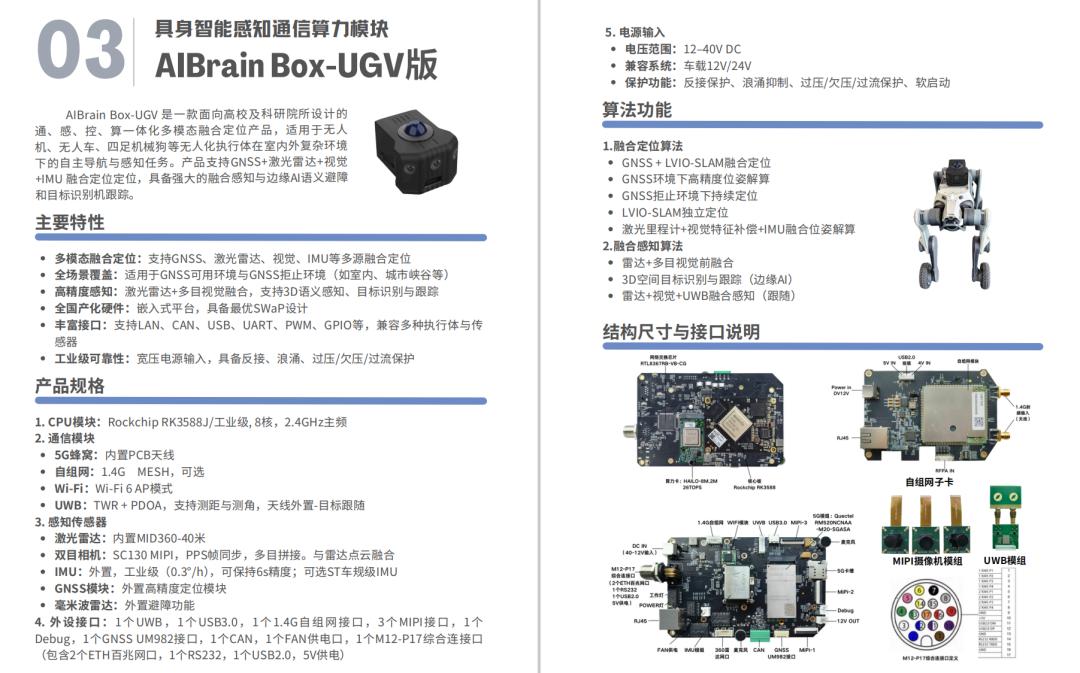
4. Video Links: The Real Bottleneck
Control requires video assistance, but naive full-frame high-bitrate streaming won’t work.
Must use:
Perception-aware Video Transport
This is the core strategy.
Recommended: Three-Tier Video Streaming
-
Layer A: Control Preview
Low bitrate, always on
Parameters:
- 480p
- 10fps
- 300~800kbps
Provides situational continuity.
-
Layer B: Focus Stream
ROI high-quality region, dynamically triggered
Examples:
Doorway
Target
Operation area
Bitrate: 2~6 Mbps
-
Layer C: Forensic Stream
High-quality recording
Local storage
On-demand upload
5. Optimal ROI Strategy
Semantic ROI.
That is:
Perception module generates:
{
"bbox": [x,y,w,h],
"class": "door",
"priority": 0.92
}Encoder follows the ROI map.
Applicable to:
1. Manual control area — auto-enhance the region the joystick points to
2. 检测Target-人 / 门 / 热源 / 障碍
3. Operation point — robotic arm grasp location
6. Dynamic Encoding Strategy
Network-Adaptive Ladder
Priority状态
Green: Ample bandwidth
1080p @ 30 fps
Yellow: Light congestion
720p @ 20 fps
Orange: Severe congestion
ROI only
Red: Control keep-alive
240p + metadata
Switching based on:
RTT
Packet loss
Jitter
Queue occupancyNot just bandwidth.
7. Multi-Operator Observation & Control Design
Single Control / Multi Observe
That is:一个人控,多人看
Example:
UAV-3
Controller: Squad-2-A
Observers:
- SquadLeader
- CommandHQ
- Squad-2-BObservers: Can view, can annotate, cannot send control commands.
Feature: Collaborative Pointer
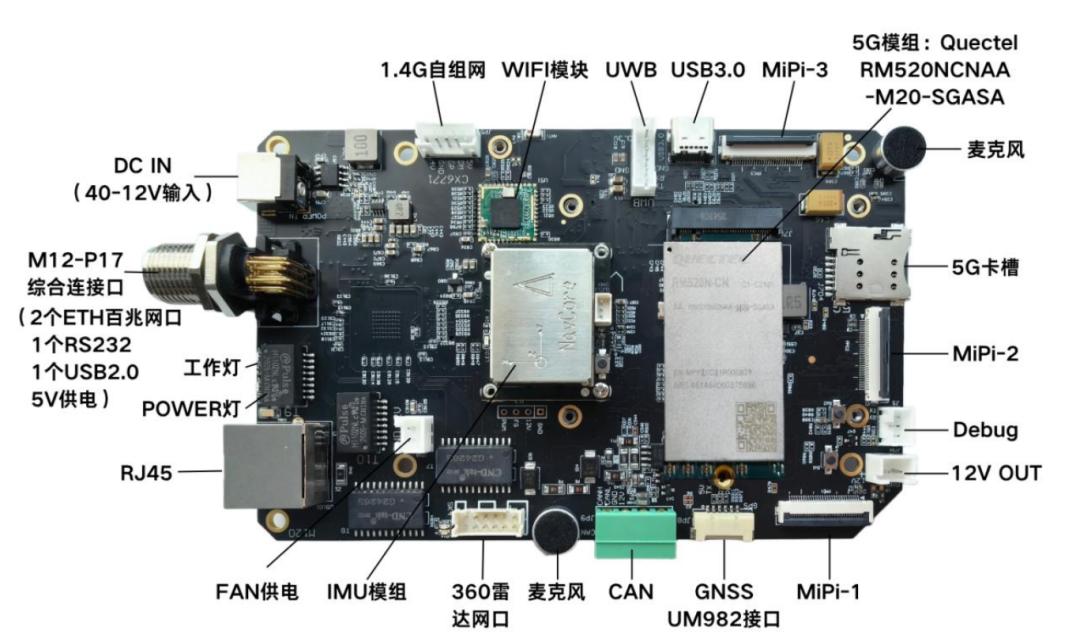
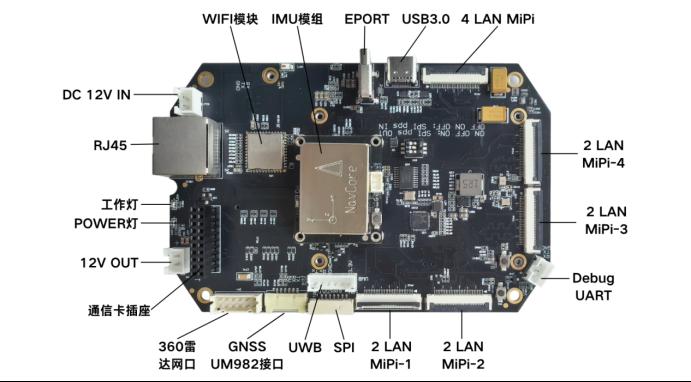
8. Control Link Recommendations
-
Close-Range LOS
Primary: StarFlash / WiFi Direct
Secondary: 600M
Encoding: Low-latency I-frame sparse
-
Squad NLOS
Primary: 600M Mesh
Secondary: 5G
Encoding: ROI + adaptive GOP
-
Battalion Remote Control
Primary: 5G
Secondary: SAT / 1.4G
Control: High-level commands, not low-level teleoperation
Building MUM-T systems for defense or industrial applications? Aomway provides custom UAV, UGV, and communication solutions optimized for multi-domain teaming. Contact us at [email protected] for expert consultation.
9. Control Software Roadmap
1. Control Authority Manager
Token management
Authorization
Audit logging
2. Stream Adaptation Engine
Dynamic bitrate
ROI
Multi-stream switching
3. Handoff Manager
Control handoff
State synchronization
4. Policy Engine
Rules:
uav:
remote_direct_control: false
squad_override: true自治优先 + 监督控制 + TokenAuthorization + ROI感知视频 + 分层控制域
Devices execute autonomously; humans intervene only at critical moments, with intervention rights strictly scheduled.
Have questions about this article? Feel free to contact us at [email protected] — we’re happy to help!