
Key Takeaways
- Ukraine’s passive acoustic air-defense network uses about 14,000 sensor nodes at $400 to $1,000 each, each built from a parabolic dish, a microphone, an Android phone and a backup battery.
- A single node detects drones at roughly 5km and cruise missiles at roughly 7km, covers about 200 degrees and mounts 10 to 12m above ground.
- Reported detection rate against propeller-driven targets reaches 99.6%; after adversaries altered engine signatures, accuracy fell only 3% and recovered after model retraining.
- In one cited engagement, 80 of 84 incoming one-way attack drones were downed, about 95%, at a network cost the US Air Forces in Europe commander called cheaper than two interceptor missiles.
- Against jet-powered targets the interception rate falls from above 90% to about 60%, and the engagement window shrinks from roughly 60 seconds to a dozen.
Acoustic drone detection answers the hardest part of low-altitude defense: finding the target before it arrives. Instead of more interceptor missiles, Ukraine built a net of about 14,000 passive acoustic sensors that listen for engine signatures, triangulate a track and keep radar silent until a threat is confirmed. As of 2026, the approach has moved from a field expedient to a technology track that several militaries and defense contractors are now pursuing in parallel.
Air Defense Became an Industry Chain
Start with the scale of the response. Official Ukrainian figures put more than 60 companies working on interceptor drone development, with several hundred trained interceptor crews formed, and at least one domestic manufacturer accelerating work on a high-speed interceptor aimed at jet-powered targets.
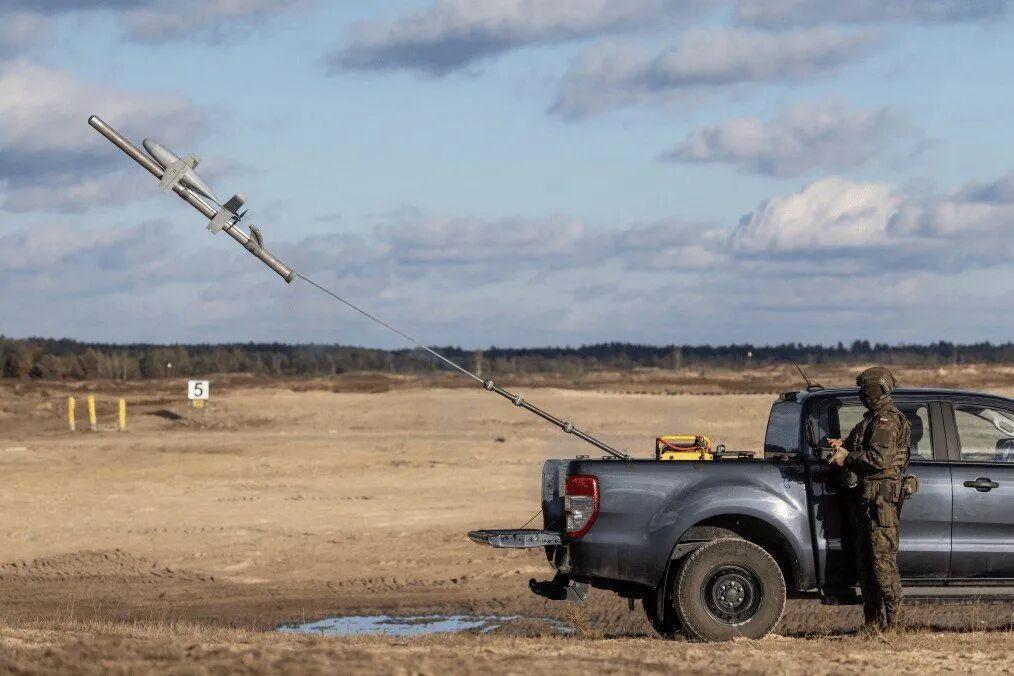
The government innovation platform’s technical roadmap is not one path but four running in parallel: turbojet-powered interceptor drones, impeller interceptors with electric motors, high-speed electric racing quadcopters, and techniques for downing propeller-driven targets on a head-on course.
The speed tiers are stated plainly. Some high-speed quadcopters reach 550km/h, enough for early jet-powered models flying at up to about 500km/h. For newer models, industry judgment is that turbojet or rocket propulsion becomes mandatory, because propeller platforms simply cannot catch them.
The capability is also spreading. In August 2026, a Ukrainian company mounted its previously fixed passive acoustic warning sensors on a moving vehicle for the first time, testing them at a NATO exercise in Latvia; the company described the result as “promising rather than perfect”. A European defense major has begun developing its own acoustic monitoring network, Romania has invited the team for field trials, a Polish firm has restarted work on a similar system, and NATO allies have committed funding to deploy another 15,000 third-generation sensors to fill gaps and progressively replace first-generation units.
In other words, this has stopped being a battlefield improvisation and become a technology track that militaries and industry are pursuing simultaneously.
Why Listen Instead of Illuminate
Acoustic detection was chosen because of a structural weakness in conventional radar at low altitude.
Small low-altitude targets suffer from earth curvature, terrain masking and ground clutter, so radar often detects them late. Acoustic nodes listen passively and emit nothing, which makes them both harder to jam electronically and impossible to locate by emissions.
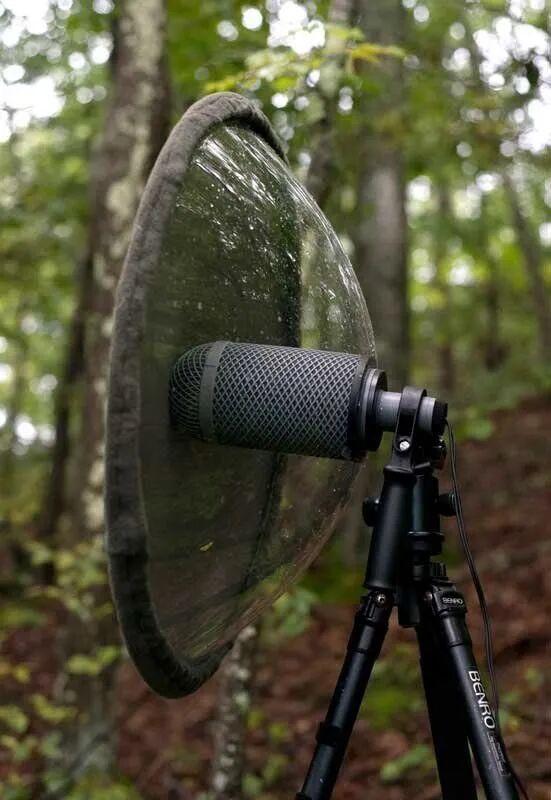
The crudeness of the hardware contrasts sharply with what it accomplishes. A typical node consists of a parabolic dish, a microphone, an Android phone, a backup battery and some software, mounted 10 to 12m up. Detection range is about 5km for drones and about 7km for cruise missiles, with a listening coverage angle of roughly 200 degrees.
The dish focuses acoustic energy, the microphone captures it, the phone records and relays, and the battery keeps the node alive.
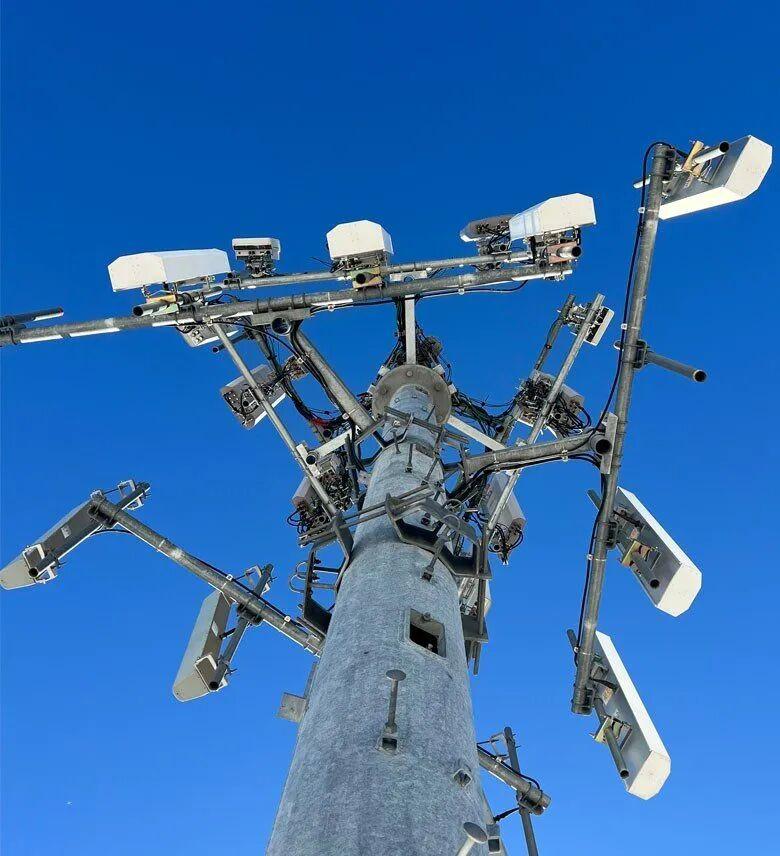
What actually converts noise into intelligence is the algorithm. Sensors link to distributed processing nodes that use machine learning to classify the type of air threat, then triangulate its position. Later models moved to custom microcomputers running the classification algorithm.
One research note puts detection rate against propeller-driven targets at 99.6%. When adversaries changed their engine acoustic signatures, recognition accuracy dropped only 3% and recovered quickly after retraining.
That is the real shift: countermeasures moved from changing hardware to changing data, and one retraining cycle catches up with an opponent’s modification.
The Tactical Payoff: Radar Stays Silent by Default
The operational benefit is more direct than the detection statistics. An acoustic net lets radar stay silent by default, avoiding anti-radiation missile attack, and switch on only after acoustics confirm a threat. Detection results push to the forward edge, where mobile teams in pickup trucks with machine guns and night vision move onto the predicted flight path ahead of time.
In one engagement cited by the commander of US Air Forces in Europe, 80 of 84 incoming one-way attack drones were downed, about 95%. He summarized the cost of the whole network as less than two interceptor missiles, and called on NATO to invest in cheaper, more imaginative mobile defense systems.
Note the causal order: cheap detection comes first, and cheap kills follow.
Three Cost Estimates That Do Not Agree
The public numbers for this system are not tidy, and the accounting scopes must be kept separate.
| Source | Claim | Likely scope |
|---|---|---|
| NATO assistant secretary general for operations, 2025 seminar | Under €50 million of acoustic sensors covered the country’s airspace at and below 1km | Nationwide sensor coverage |
| Public research note, $400 to $1,000 per node | Whole network under $5 million | Node hardware for roughly 14,000 units |
| Commander, US Air Forces in Europe | Cheaper than two interceptor missiles | Whole network measured against munition cost |
Coverage claims conflict just as sharply. One source says about 14,000 nodes cover roughly 80% of the territory; another says comparable systems cover only about 5%. The statistical bases are unstated, so the two cannot be compared directly.
Only the third ledger is consistent across sources: a single node costs $400 to $1,000, a lightweight kit of five sensors weighs about 25kg, and one or two people can install it.
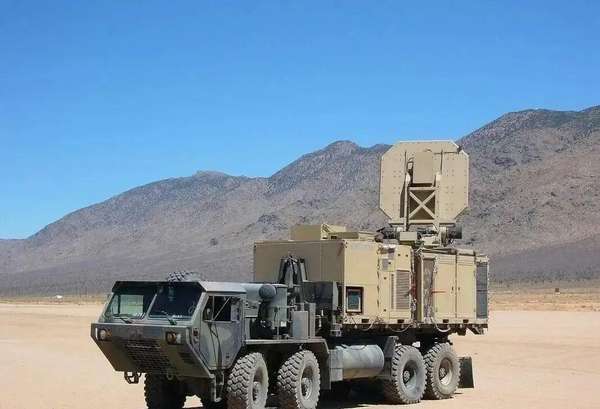
Detection only makes sense inside the full kill chain. A Ukrainian combat management system aggregates drone, scout, ground sensor and satellite information into a real-time situational picture; the defense ministry says the platform handles more than 100,000 video streams from drones each month, with AI detecting about 70% of enemy targets in real time. Other public material says the system can coordinate more than 50 unmanned platforms, with its AI component automatically detecting about 12,000 enemy targets per week at roughly 2.2 seconds per target.
The chain is then complete: the acoustic net fills blind spots and provides early warning, the situational system aggregates and distributes, and mobile teams, interceptors and automated turrets execute the terminal phase.
Jet Power Compresses the Engagement Window
The system’s advantage is being offset by an adversary’s physical upgrade. One sentence sets the background: interception rates against propeller-driven targets held steady above 90%, and fell to about 60% once jet-powered models appeared — a change the Ukrainian air force spokesperson has publicly acknowledged.
| Metric | Propeller-powered target | Jet-powered target |
|---|---|---|
| Interception rate | Above 90% | About 60% |
| Flight altitude | Low | 2 to 5km |
| Target speed | Low, catchable in a tail chase | 500 to 600km/h |
| Interceptor speed ceiling | Up to 550km/h for high-speed quads | Legacy interceptors generally under 450km/h |
| Ground crew engagement window | About 60 seconds | A dozen or so seconds |
The change lands on two dimensions at once. New models push altitude to 2 to 5km and speed into the 500 to 600km/h band, while conventional interceptor drones generally top out below 450km/h, which makes tail-chase tactics unworkable. One analysis estimates the roughly 60-second detection and aiming window available to a ground crew compresses to a dozen seconds against fast targets.
Acoustic nets solve slow, low and small. When the target becomes fast and high, early detection may still not be early enough to shoot.
The four Ukrainian responses are equally explicit: develop low-cost guided missiles to replace expensive air-defense rounds; shift interception from tail chase to head-on engagement and path prediction; strengthen electronic warfare against navigation and communications; and drive multi-sensor fusion across radar, electro-optics and electronic warfare.
The engineering bottlenecks are not glossed over. Field testing shows some interceptor drones have aerodynamic control difficulties above 400km/h, and some prototypes fail to complete lock-on and attack before reaching the target. Speed, reliability and low cost must all hold at once, which is extremely difficult.
A researcher at a Norwegian defense research institute judges that Ukrainian industry alone is unlikely to field effective suppression of jet-powered targets in the near term.
The final layer is mobility. Fixed nodes are survivable but fixed in place; the August 2026 vehicle test was the first attempt to put detection on a moving platform, described by the vendor as promising rather than perfect, and not yet fielded.
Five Lessons for Low-Altitude Defense Design
First, detection is scarcer than interception. A $400 to $1,000 acoustic net buys radar the option to stay silent and mobile teams the chance to pre-position. When evaluating a counter-UAS architecture, keep detection cost and interception cost on separate ledgers; solve cheap early warning first, and expensive firepower no longer has to run continuously.
Second, survivability of a passive sensor is worth more than detection range. Acoustic nodes emit nothing, so they are hard to jam and give anti-radiation weapons nothing to home on; in a distributed layout, losing some nodes does not collapse overall performance. When designing a low-altitude gap-filler layer, make “can this sensor be located?” a first-tier requirement — a silent sensor beats a longer-reaching one that announces itself.
Third, redundancy beats single-point performance. Destroy one radar site and you get a blind spot; lose a batch of 14,000 cheap nodes and the net still works. Five sensors per kit, installable by one or two people. Validate distributed architectures by the blast radius of a single failure: the cheaper and more replaceable the node, the closer the system gets to being unkillable.
Fourth, a retrainable classifier is an underrated countermeasure. Accuracy fell only 3% after the adversary changed engine signatures, and retraining restored it. Against low-cost targets that keep evolving, prefer a route where the recognition model updates online; turning countermeasures into a data loop is faster and cheaper than replacing hardware every cycle.
Fifth, a detection advantage gets cancelled by platform speed. Jet-powered models push altitude to 2 to 5km and compress the window to a dozen seconds, forcing interceptors from propeller to turbojet or rocket propulsion and toward head-on, path-predicted engagement. When planning layered air defense, validate each layer against the detection window rather than the detection range; if any layer’s response time cannot keep up, the previous layer’s warning advantage goes to zero.
Have questions about this article? Feel free to contact us at [email protected] — we’re happy to help!
Frequently Asked Questions
How does acoustic drone detection actually work?
Passive nodes capture engine sound with a parabolic dish and microphone, machine learning classifies the signature as a drone or cruise missile, and triangulation across networked nodes fixes the position. Nothing is transmitted, so the sensor is hard to jam or locate.
How much does an acoustic air-defense sensor node cost?
Between $400 and $1,000 per node, using a parabolic dish, microphone, Android phone and backup battery. A lightweight kit of five sensors weighs about 25kg and can be installed by one or two people.
What is the detection range of a passive acoustic sensor?
About 5km for drones and about 7km for cruise missiles, with roughly 200 degrees of coverage and the node mounted 10 to 12m above ground. Distributed nodes extend coverage by triangulating the same target.
Why does acoustic detection beat radar for low-altitude targets?
Because radar struggles with earth curvature, terrain masking and ground clutter at low altitude, and an emitting radar invites anti-radiation attack. A passive acoustic net detects without radiating, letting radar stay silent until a threat is confirmed.
Why do jet-powered drones defeat acoustic networks?
Speed and altitude. Jet models fly at 2 to 5km and 500 to 600km/h, faster than most interceptor drones, which compresses the engagement window from about 60 seconds to a dozen and drops interception rates from above 90% to about 60%.
About Aomway
Aomway is a drone technology company that designs and manufactures FPV video transmitters, antennas, cameras and flight electronics, and publishes engineering deep dives on autonomous navigation and RF systems. Explore the full hardware lineup at aomway.com to see the components behind these builds.