

Russian serial-production Boomerang (Бумеранг) FPV drones now operate at frequencies up to 7.2 GHz — above the coverage range of most portable drone detection systems. Combined with terminal guidance modules and swappable antennas with pre-scored break lines, this represents a significant evolutionary step in tactical FPV drone design.
Key Takeaways
- Frequency evasion: Boomerang drones hop to 6–7.2 GHz for video transmission, placing them above the typical ~6 GHz detection ceiling of early-generation portable drone detectors
- Swappable antennas: Telemetry antennas feature pre-scored break lines, allowing soldiers to field-adjust operating frequency ranges by physically trimming the antenna length
- Terminal guidance: An autonomous terminal homing module reduces the effectiveness of portable electronic warfare (EW) jammers commonly used for vehicle protection
- Platform specs: Boomerang-10 has a 6.5 kg maximum takeoff weight, 3 kg payload capacity, 150 km/h top speed, 20–minute endurance, and a 17 km combat radius
- Family variants: Includes loitering munition (kamikaze), light bomber/minelayer, reconnaissance, and interceptor configurations
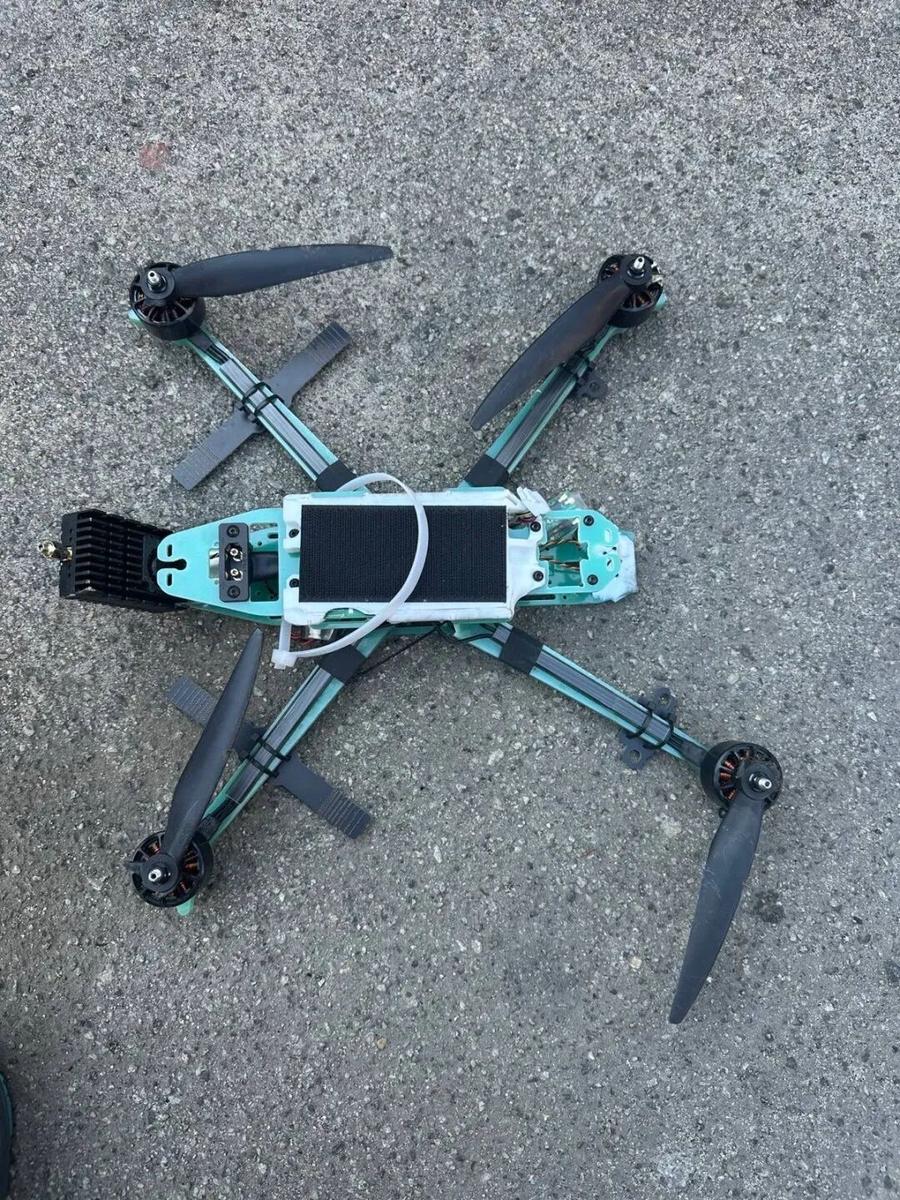
The Boomerang is a mass-produced quadcopter FPV drone primarily designed for ground-target engagement. The Russian Ministry of Defense first publicly displayed the platform in March 2023, and within weeks, Ukrainian forces captured the first trophy unit.
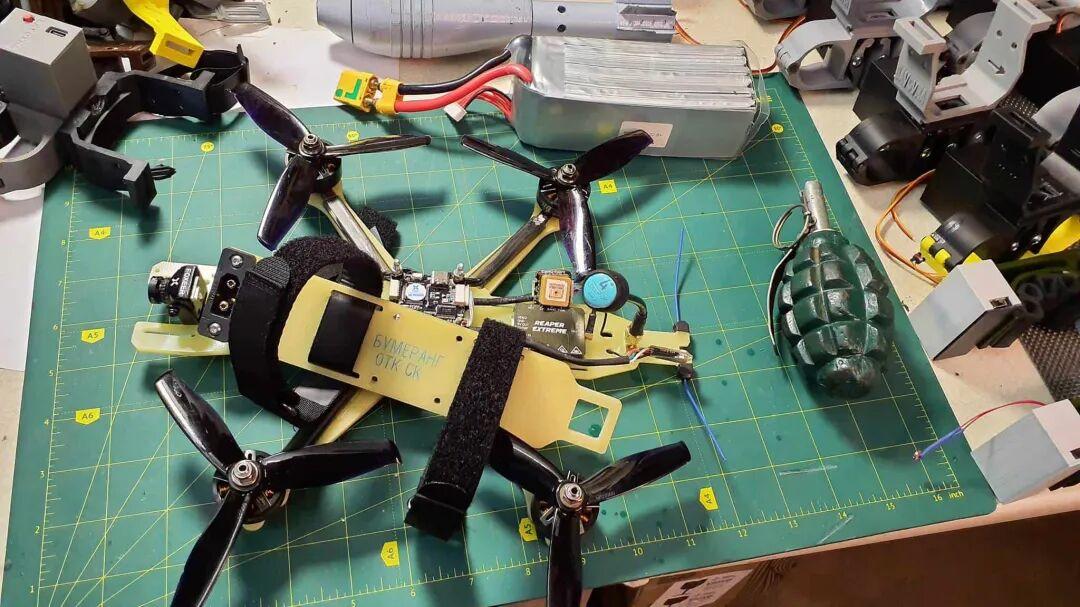
Early Boomerang variants used simple fiberglass airframes assembled primarily from widely available Chinese-sourced commercial off-the-shelf components. Leaked Russian procurement documents indicate that the 10-inch Boomerang-10 has a maximum takeoff weight of 6.5 kg, a payload capacity of up to 3 kg, a top speed of 150 km/h, and up to 20 minutes of endurance. Russian military-affiliated channels have reported an effective combat radius of 17 km for the Boomerang-10.
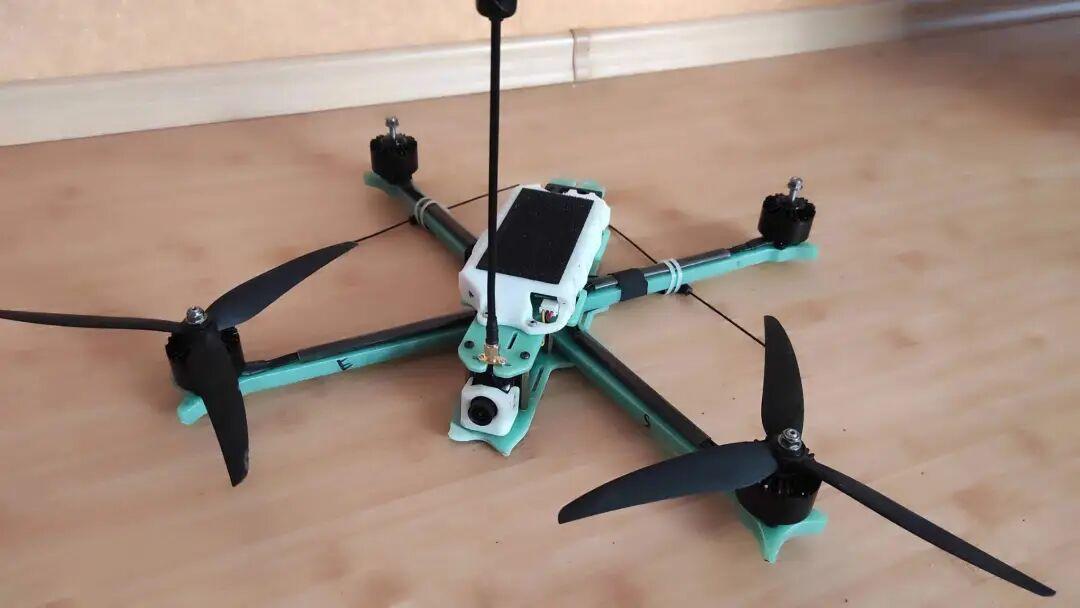
Technical Evolution: The July 2026 Configuration
Swappable Frequency Antennas
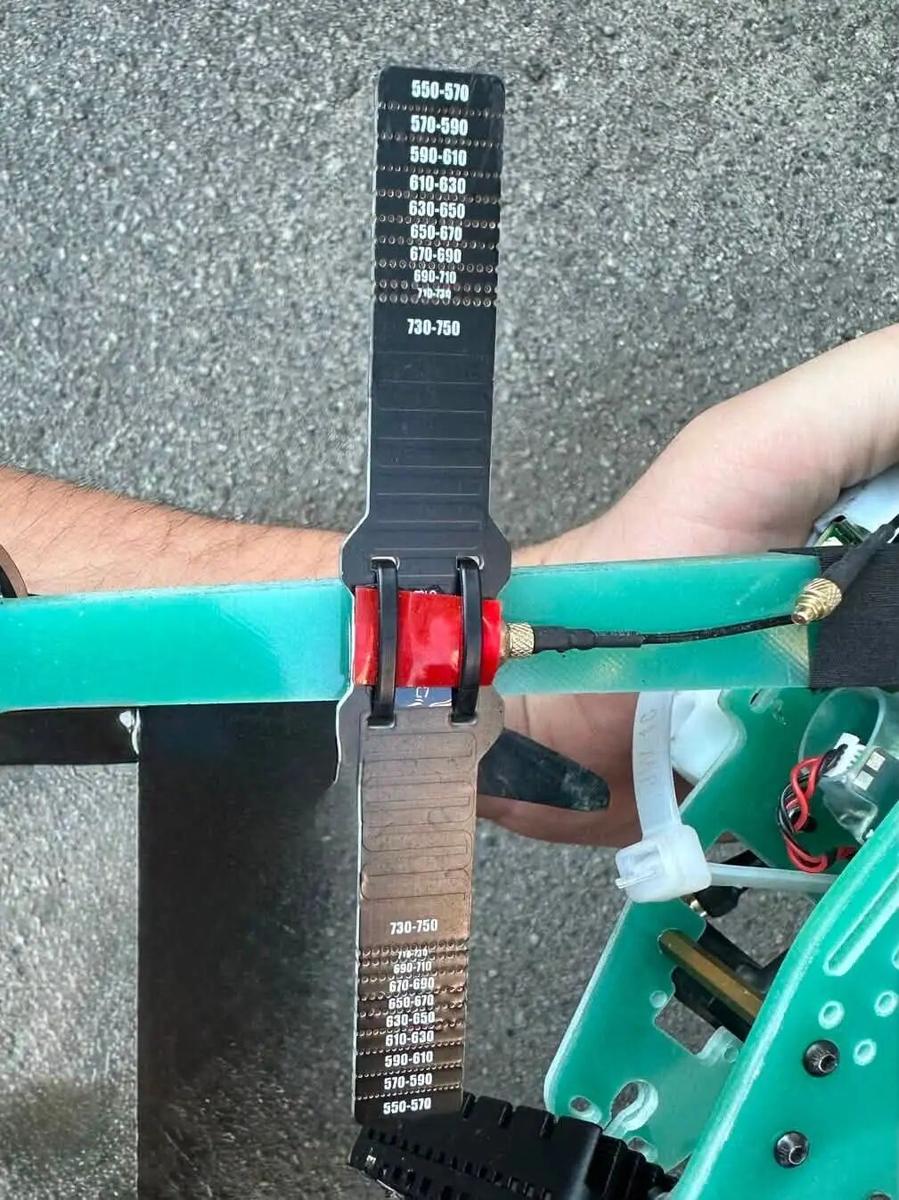
The upgraded version fielded as of July 2026 features telemetry antennas with pre-scored break lines. This design allows soldiers to physically shorten the antenna in the field, shifting the operating frequency to a specific desired range without needing specialized tools or replacement antennas.
This is a practical, low-cost approach to frequency agility: rather than relying on software-defined radio reconfiguration (which adds cost and complexity), the Boomerang’s antenna system lets the operator mechanically select the band by trimming the antenna to a pre-marked length calibrated for a specific frequency range.
Video Transmission Above 6 GHz
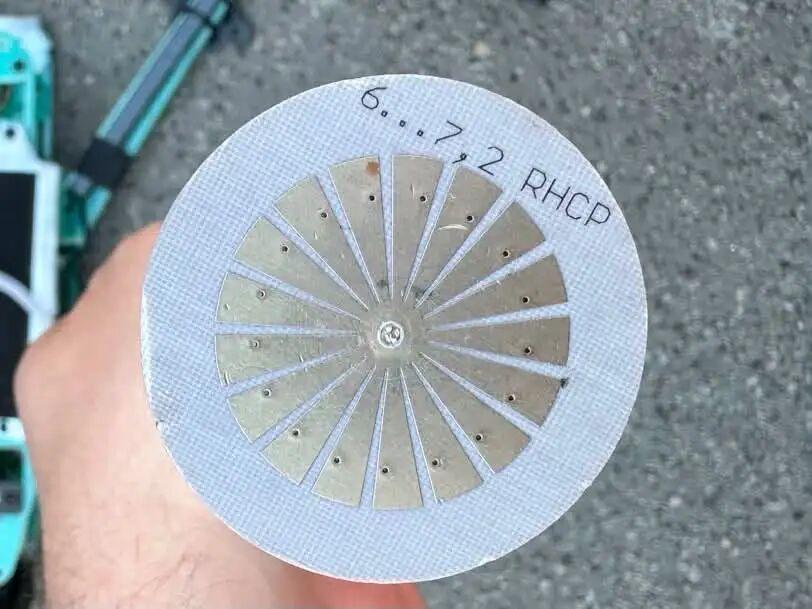
The video downlink antenna operates in the 6–7.2 GHz band. Most portable FPV drone detectors — especially earlier-generation models — have a detection ceiling around 6 GHz, meaning they cannot detect the Boomerang’s video transmission signal. This creates a detection gap that operators can exploit.
However, some newer-generation drone detectors have already been equipped with a fourth detection channel covering 7.2 GHz and above. The counter-detection advantage is therefore time-limited: detector technology is evolving in parallel with drone transmission capabilities.
Terminal Guidance Against EW
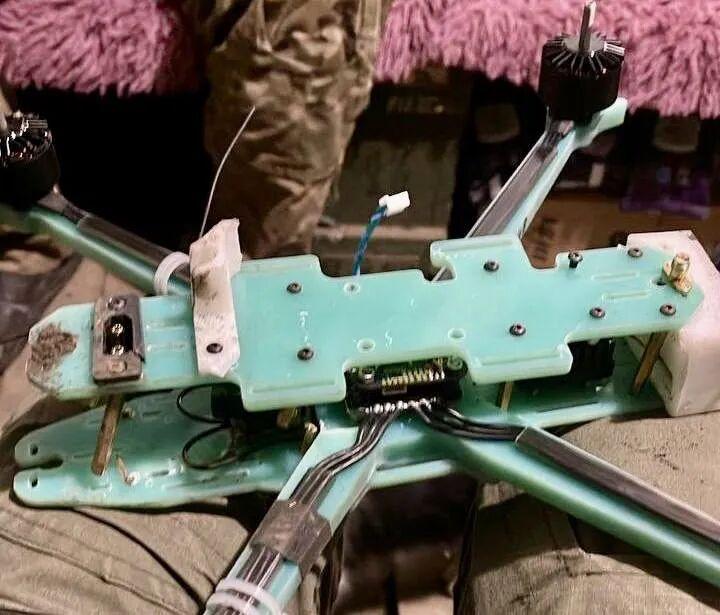
Another significant upgrade is the terminal guidance system, whose application on this drone family first became known in early 2025. The system is designed to reduce the effectiveness of portable electronic warfare (EW) jammers commonly deployed to protect vehicles and fixed assets.
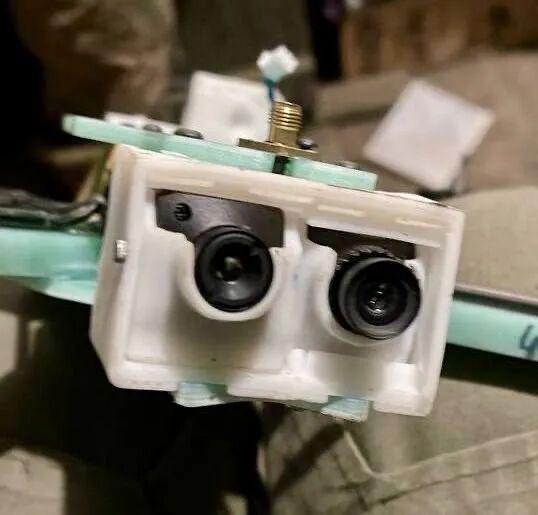
In a terminal guidance scenario, the drone locks onto a target using onboard computer vision in the final approach phase. This means that even if the operator-to-drone control link is jammed, the drone can continue its attack autonomously — the jamming must disrupt the onboard vision system itself, which is considerably harder than jamming an RF control channel.
Boomerang Family Variants
The Boomerang FPV drone family encompasses multiple mission configurations:
- Loitering munition (kamikaze): Primary strike variant with high-explosive payload
- Light bomber / minelayer: Payload release mechanism for dropping grenades or scattering anti-personnel mines
- Reconnaissance: Configuration optimized for observation and target acquisition
- Interceptor: Anti-drone variant for engaging adversary quadcopters and fixed-wing reconnaissance UAVs
Production and Supply Chain
According to an investigation by The Insider, Boomerang drone production is linked to Russian entrepreneur Aleksandr Atamanov. In 2023, his company Intellekt Mashin (Интеллект Машин) transferred the assembly license for the Boomerang to an educational institution in Chukotka, an unusual production arrangement for a front-line weapons system.
The Boomerang’s reliance on commercially available Chinese components — including flight controllers, motors, ESCs, and camera modules — places it within the broader category of COTS-assembled tactical drones that have become ubiquitous in modern conflict zones. The platform’s innovations lie not in proprietary hardware but in the system-level integration of frequency agility, terminal guidance, and field-configurable antennas.
Analysis: The Evolving FPV Arms Race
The Boomerang’s 7.2 GHz video transmission capability illustrates a broader trend in the tactical FPV drone ecosystem: the detection-evasion cycle is accelerating. Each advancement in drone transmission frequency is met with detector upgrades; each new EW jamming technique is countered with autonomous terminal guidance.
Key implications:
- Detector-gap exploitation is temporary. The 6–7.2 GHz evasion window will narrow as fourth-channel detectors proliferate. The enduring advantage may come from faster frequency-hopping speeds rather than absolute frequency ceilings.
- Terminal guidance shifts the EW calculus. Jamming must now contend with onboard autonomy, not just RF links. This favors systems that combine RF denial with optical countermeasures (laser dazzlers, smoke obscuration) or hard-kill CIWS.
- Field-configurable antennas reduce logistics burden. Pre-scored break lines mean a single antenna stock can serve multiple frequency bands — a practical innovation for distributed, low-infrastructure drone operations.
- COTS dependency is both a strength and a vulnerability. The Boomerang’s construction from widely available components enables rapid scaling but also means adversaries can study, replicate, and counter the design with equal speed.
Conclusion
The Boomerang FPV drone family, in its July 2026 configuration, demonstrates a mature approach to tactical drone evolution: frequency agility through mechanical antenna selection, counter-EW terminal guidance, and a diversified mission set across kamikaze, bomber, reconnaissance, and interceptor roles. Its innovations are practical rather than exotic — field-swappable antennas, dual-camera payloads, and COTS-based construction — but as a system-of-systems, it represents a step-change in FPV drone capability on the modern battlefield.
For the broader drone industry, the Boomerang case study reinforces several technology trends relevant to commercial and industrial UAV development: the value of frequency agility in contested RF environments, the growing role of onboard autonomy for link-denied operations, and the operational benefits of rapid field reconfiguration without specialized tools.
If you have any questions about FPV drone technology, frequency management, or anti-jamming solutions for industrial UAV applications, feel free to contact us at [email protected].
Have questions about this article? Feel free to contact us at [email protected] — we’re happy to help!
Frequently Asked Questions
1. Why is 7.2 GHz significant for FPV drone detection evasion?
Most portable FPV drone detectors — especially those deployed before 2025—2026 — have detection coverage up to approximately 6 GHz. Operating video transmission at 6–7.2 GHz places the signal above this ceiling, making the drone invisible to those specific detectors. Newer fourth-channel detectors already cover 7.2 GHz and above, so this advantage is narrowing over time.
2. How do pre-scored antenna break lines work?
The telemetry antenna is manufactured with physical score marks at specific lengths. Each length corresponds to a tuned frequency range. To change the operating frequency, the soldier physically breaks (trims) the antenna at the appropriate score line. This is a mechanical, low-cost alternative to software-defined frequency selection.
3. What does terminal guidance do against electronic warfare jamming?
Standard FPV drones rely on the operator-to-drone control link. When this link is jammed, the drone cannot receive steering commands. Terminal guidance uses an onboard camera and computer vision to lock onto and track a target autonomously in the final approach, meaning jam-resistant RF links are no longer the sole determinant of mission success.
4. What is the Boomerang-10’s actual operational range?
Russian military sources claim a 17 km effective combat radius. However, actual range depends on environmental conditions, payload weight, flight profile, and RF environment. The 20-minute endurance at a claimed 150 km/h top speed suggests that 17 km is achievable in ideal conditions but may be reduced under tactical constraints.
5. Are civilian FPV drones affected by 7.2 GHz detection issues?
Civilian and commercial FPV drones typically operate in the 2.4 GHz, 5.8 GHz, or 900 MHz ISM bands. The 6–7.2 GHz range is uncommon in civilian applications. However, the broader trend of frequency-hopping and counter-drone detection race is highly relevant to industrial drone security, especially for critical infrastructure protection where unauthorized drone detection is a priority concern.

Swertewin, righto! Let’s see if we can swerte (win) some dosh! Bring on the good times, I say! swertewin