


| [Low-Altitude Frontier Briefing] AeroVironment and Applied Intuition are pushing drone swarms beyond “multiple aircraft flying at the same time” toward “multiple aircraft autonomously collaborating to complete a mission.” On July 29, the two companies announced they are integrating Applied Intuition’s Acuity ISR/Strike collaborative autonomy software into the Mayhem 10 unmanned aerial system. Under a single operator’s supervision, multiple vehicles can cooperatively sense the environment, share information, track targets, and adjust task allocation based on evolving threats. Recent tests have already demonstrated synchronized multi-vehicle flight, swarm coordination, and dynamic adaptation. |
The Headline Here Is Not a New Drone
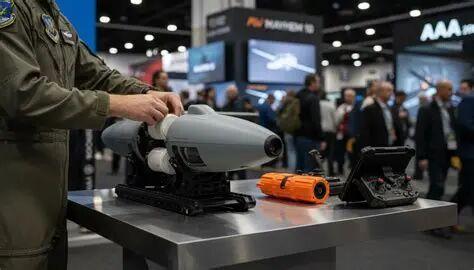
Mayhem 10 is not a brand-new product.
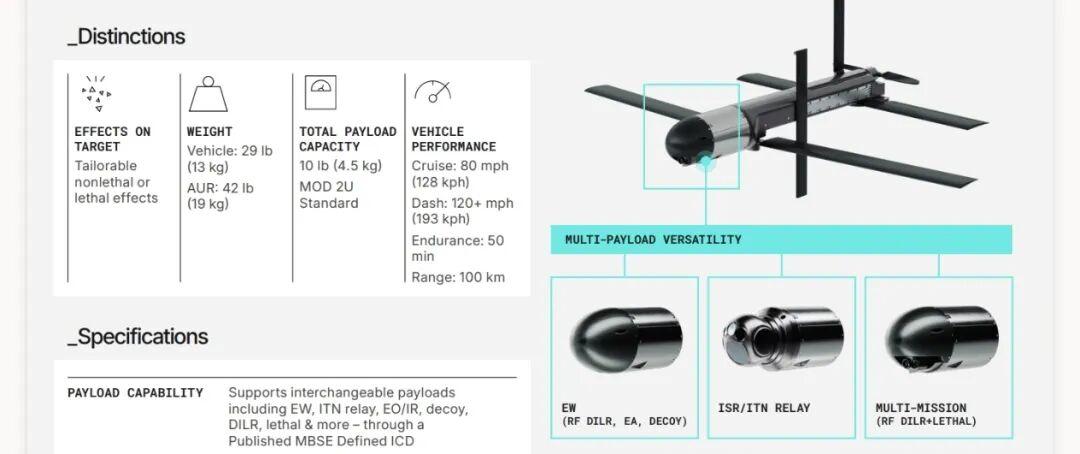
AeroVironment first unveiled the platform in April of this year. It is positioned as a modular unmanned aerial system capable of launching from air, ground, and maritime platforms, with the flexibility to swap reconnaissance, electronic warfare, communications relay, or other mission payloads depending on the task.
Publicly disclosed specifications show the Mayhem 10 carries a maximum mission payload of approximately 10 pounds (4.5 kg), with a mission range exceeding 100 km, endurance of over 50 minutes, and a system that can be assembled and launched within five minutes. The platform is also designed for GPS-denied, communications-jammed, and navigation-spoofing environments.
What genuinely deserves attention is not the airframe — it’s the autonomy software layer that can orchestrate multiple drones to act together.
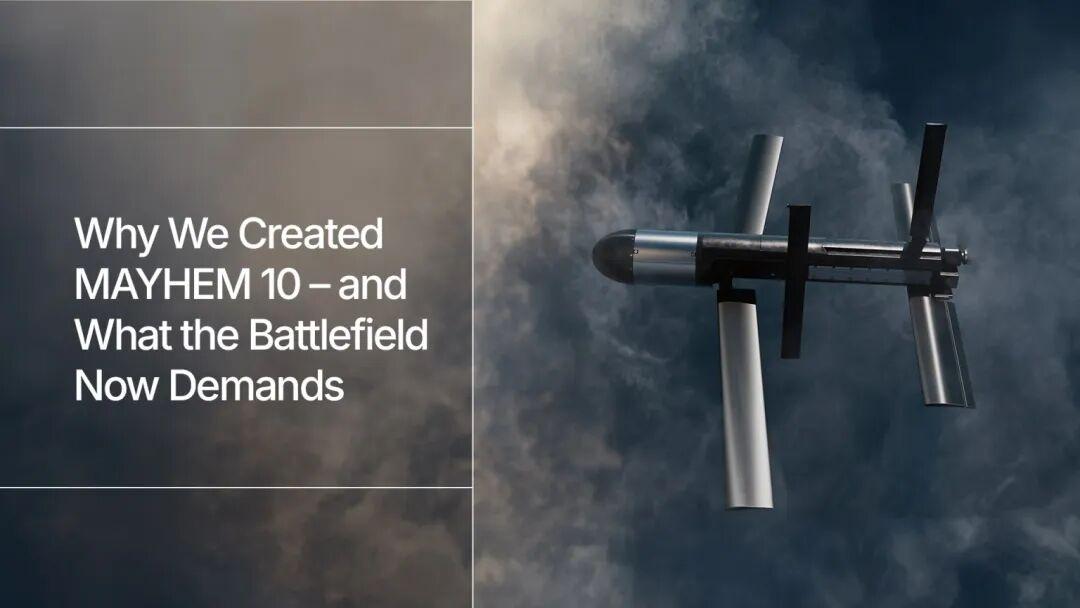
As described by both parties, Acuity ISR/Strike is not tied to any specific airframe. It enables multiple unmanned systems to share perception and mission data, and perform collaborative planning and dynamic adjustments under human supervision.
This partnership does not add a bigger battery or a higher-resolution camera. Instead, it attempts to give a swarm of drones a shared “mission brain.”
The Operator Is Transitioning from “Pilot” to Mission Manager
In traditional drone operations, a single operator typically maintains continuous attention on one aircraft’s flight path, attitude, payload, and communications status.
When the number of aircraft increases, human workload rises rapidly. If every drone requires individual control, what gets called a swarm easily degrades into multiple operators flying multiple aircraft — not genuine autonomous coordination.
The approach AeroVironment and Applied Intuition are now proposing involves a single operator specifying mission intent, after which the system distributes work across multiple Mayhem 10 platforms. Different vehicles can assume roles such as sensing, target confirmation, communications relay, or other tasks, and reallocate roles based on real-time field information. The official release also notes that multiple vehicles can share mission data in real time and respond to environmental changes.
Under this model, the human’s focus shifts from continuously manipulating flight controls toward three higher-level activities:
Setting mission objectives, supervising system decisions, and intervening at critical decision points.
This marks a significant transition in unmanned systems — from “automated flight” to mission-level autonomy. Automated takeoff, automated routing, and automated return-to-home address the question of how a single aircraft flies. Mission-level autonomy addresses how multiple aircraft divide the work, exchange information, and continue operating when mission conditions change.
The U.S. Army is advancing similar “one operator, many vehicles” capabilities. Public information indicates that troops have already completed trials in which a single operator controls five drones; relevant technology solicitations explicitly seek the ability for operators to task and coordinate small autonomous swarms through edge devices.
The Bigger Shift: Drones Are Becoming Software-Defined
Mayhem 10 employs a Modular Open Systems Architecture (MOSA).
AeroVironment describes it as an open platform: sensors, electronic warfare systems, communications payloads, and third-party autonomy software can all be integrated through standard interfaces, without redesigning the entire airframe for every new mission.
The company even uses an app-store analogy to explain the model — capabilities are no longer frozen at the point of manufacture; they can be continuously upgraded by integrating new software and payloads.
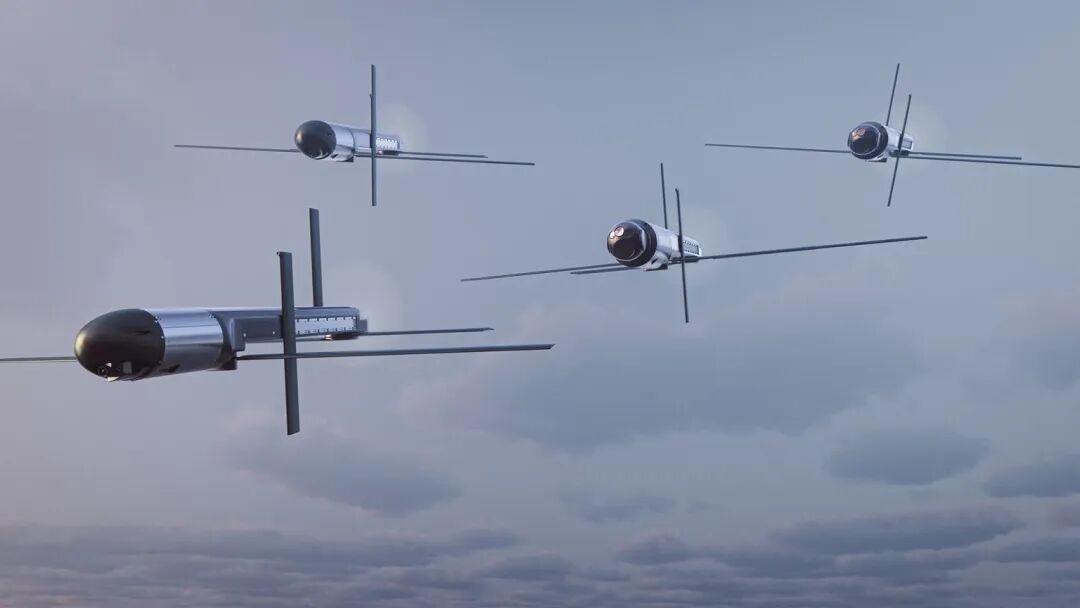
What this reflects is a structural shift underway in the drone industry:
The airframe determines the flight envelope. Sensors determine what you can see. The data link determines whether you stay connected. And autonomy software determines how the entire system acts.
Historically, a drone’s core competitive advantage centered on range, endurance, payload capacity, and flight control performance. These metrics remain important, but they are increasingly difficult to sustain as standalone moats. What genuinely separates system capability going forward may be the ability to rapidly integrate third-party algorithms, manage multiple heterogeneous vehicles, and continue executing missions under degraded communications.
In May of this year, AeroVironment also indicated that Mayhem 10 plans to enter low-rate initial production in fall 2026, with a target of reaching monthly production capacity of several hundred units by the first half of 2027. This timeline remains a forward-looking corporate goal, but it signals that the company does not intend to keep the system at the laboratory demonstration level.
This Is Not Yet “Mature Swarms at Scale”
This announcement sends a strong technical signal, but it is important to distinguish between completing integration validation and achieving scaled combat capability.
The more accurate assessment at this stage is:
Mayhem 10 has demonstrated a technical pathway from a single-vehicle platform to a collaborative unmanned system, but it will still require more open testing and real-world deployment data before it can reliably manage large-scale swarms over extended periods in complex environments.
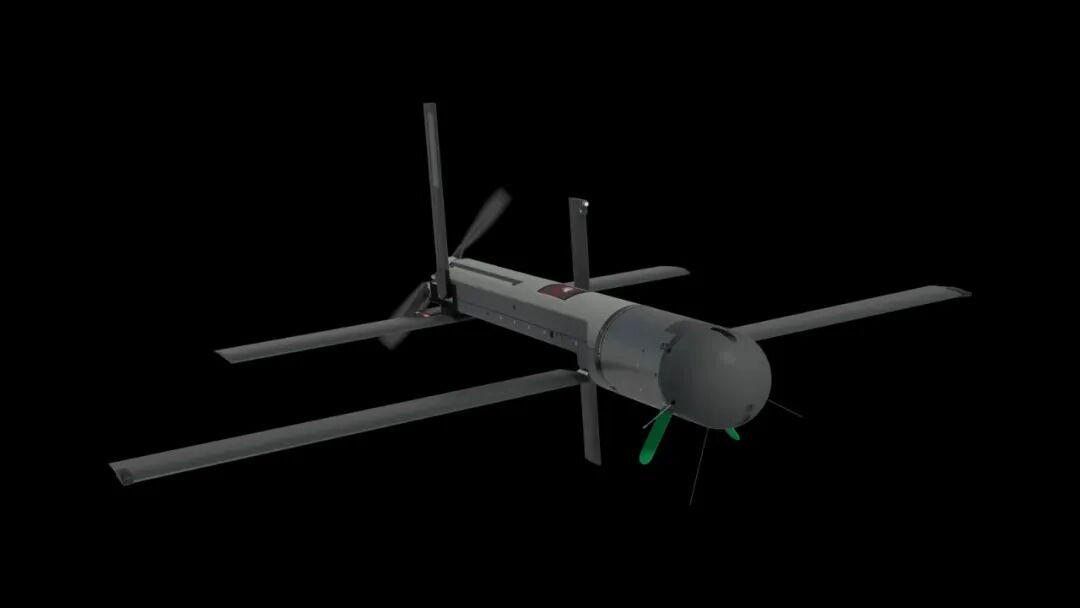
The hardest part of swarm systems is typically not getting multiple aircraft to fly in neat formations — it is maintaining reliable collaboration when sensor errors, communication latency, node failures, and mission changes all occur simultaneously.
Implications for the Civil Low-Altitude Economy
While this collaboration serves specific defense scenarios, its systems-engineering approach holds valuable lessons for civil drone and low-altitude economy enterprises.
In applications such as power line inspection, forest firefighting, emergency surveying, urban governance, and logistics delivery, the future challenge will not be solely about enabling a single drone to fly a pre-programmed route. It will be about enabling multiple aircraft — with different payloads and different endurance envelopes — to jointly execute a regional mission.
For example, during a forest fire monitoring mission, some drones can perform wide-area search, some can carry thermal imaging payloads to confirm hotspots, while others serve as communications relays. When wind direction, fire behavior, or communications conditions shift, the system must autonomously reallocate tasks.
The foundations for this type of capability closely parallel the direction demonstrated in this announcement:
Unified mission orchestration, edge intelligence, multi-vehicle information sharing, dynamic path planning, open payload interfaces, and human-in-the-loop supervision.
For domestic low-altitude enterprises, the competitive focus may gradually shift from “how many airframe models do you have” to “can you organize airframes, onboard computing, sensors, data links, and autonomy algorithms into a continuously upgradeable system.”
Whoever controls the mission operating system, standardized interfaces, and the multi-vehicle collaboration framework is likely to control the system-level gateway to future low-altitude applications.
Conclusion
The most notable aspect of the AeroVironment and Applied Intuition collaboration is not “yet another swarm drone has appeared.”
The real signal it sends is that leading unmanned systems companies are beginning to package multi-agent collaboration, physical AI, and open architectures into engineering capabilities that can be integrated, validated, and progressively scaled into production.
The next phase of the drone industry is not just about flying farther, longer, or with heavier payloads.
The more critical questions will be:
Can a group of drones understand the same mission? Can they autonomously divide labor? Can they continue collaborating when conditions change? And can a human operator safely and effectively manage them?
When an operator transitions from controlling a single aircraft to overseeing an autonomous flight team, drones truly begin to evolve from tools into systems.
At Aomway, we see the same paradigm shift unfolding across the FPV and commercial drone ecosystem. The transition from piloting individual quads to orchestrating multi-drone operations — whether for cinematic production, industrial inspection, or competitive racing — demands the same building blocks that Mayhem 10 and Acuity demonstrate at military scale: unified mission planning, real-time data sharing across vehicles, and adaptive role allocation under dynamic conditions. Our FPV goggle systems are designed not just as video receivers, but as the operator’s decision interface — the point where sensor fusion, telemetry aggregation, and situational awareness converge. As the industry moves from remote-controlled aircraft to mission-managed autonomous teams, the operator’s interface becomes the critical link between human intent and swarm execution. Have questions about multi-drone operations, collaborative autonomy, or integrating swarm capabilities into your UAV workflow? Contact us at [email protected].
Frequently Asked Questions
1. How is Acuity ISR/Strike different from conventional drone autopilot or ground control station software?
Conventional autopilots handle flight control for a single aircraft — waypoint following, attitude stabilization, return-to-home. Ground control stations typically display telemetry and video from one or a few aircraft but do not orchestrate multi-vehicle collaboration. Acuity ISR/Strike operates at a higher layer: it ingests ISR data from multiple platforms, builds a shared operational picture, reasons about task allocation across vehicles, and dynamically adjusts assignments when conditions change. It is a mission-level operating system, not a per-vehicle flight controller.
2. What makes a Modular Open Systems Architecture (MOSA) important for drone swarms?
MOSA ensures that autonomy software, sensors, and payloads from different vendors can interoperate through standardized interfaces. Without it, integrating a new sensor or a third-party autonomy algorithm requires custom engineering for every platform. For swarm operations specifically, MOSA enables heterogeneous vehicles — each with different sensors, endurance, and roles — to plug into the same mission coordination framework. This is the difference between a proprietary, locked-in system and an ecosystem where best-of-breed components can be mixed and matched per mission.
3. What are the practical limits of “one operator, many drones”?
The limiting factor is not the number of aircraft but the operator’s cognitive load when things go wrong. When all vehicles are executing nominal tasks, a single operator can supervise dozens — the system handles routine coordination. The bottleneck appears during anomaly resolution: a lost comms link, an unexpected threat, a sensor failure, or a mission re-plan that requires human judgment. Research suggests that interface design, automation transparency, and the system’s ability to explain its decisions are more important than raw vehicle count. A well-designed interface for managing 10 drones may impose lower workload than a poorly-designed interface for managing three.
4. How does collaborative autonomy handle communications degradation or jamming?
This is the hardest problem in swarm autonomy. When the data link degrades, vehicles cannot continuously share full ISR feeds or receive real-time retasking commands. The system must pre-load contingency behaviors: each vehicle carries a local copy of the mission plan with decision boundaries, so if contact is lost, it continues operating within defined constraints rather than simply returning to base. When communications resume, vehicles synchronize their local world models. The Mayhem 10 platform’s design emphasis on GPS-denied and comms-jammed environments suggests these contingency modes are a first-class design requirement, not an afterthought.
5. What does this mean for the commercial FPV and inspection drone market?
The architectural patterns demonstrated here — standardized payload interfaces, multi-vehicle mission orchestration, and operator transition from pilot to supervisor — will flow downward to commercial markets. For Aomway and the broader FPV industry, this means future goggle and ground station systems need to evolve from single-vehicle video receivers to multi-vehicle mission management interfaces. The operator will need to see not just one video feed, but a fused operational picture showing vehicle positions, task statuses, sensor coverage maps, and alerts. The transition from “fly the drone” to “supervise the mission” is not just a defense trend — it is the trajectory of the entire unmanned systems industry.
