Key Takeaways
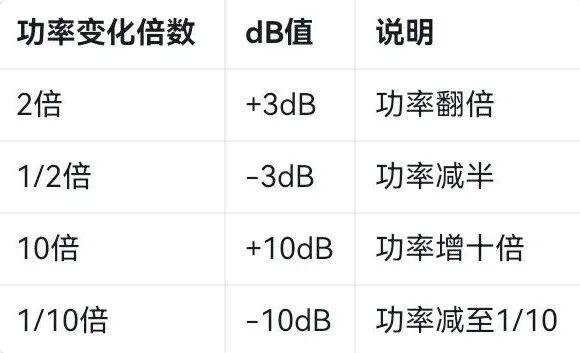
- A 10× increase in power equals +10 dB, and a 2× increase equals about +3 dB.
- Watts and dBm express absolute power levels, while dB expresses only the change in power.
- Antenna gain is relative: dBi references an isotropic radiator, dBd references a dipole, and dBi ≈ dBd + 2.15.
- Antenna length follows wavelength, λ = c/f, then λ/4, λ/2, or 5λ/8 depending on the design.
- A passive antenna adds no power; it concentrates radiation in one direction by sacrificing others.
Watts and dBm describe how much power you have, while dB describes how much it changed — two different questions that trip up many radio hobbyists. Antenna gain and antenna length follow the same logic: wavelength sets the physical size, and gain describes how well the antenna focuses energy in one direction. This guide covers the core formulas plus the practical caveats, including why VSWR matters more than raw length.
What dB, dBm, and Watts Actually Mean
dB stands for decibel: “deci” means one tenth, and “bel” comes from Alexander Graham Bell. The bel was originally a unit for loudness — every tenfold increase in sound intensity adds one bel. But a mere doubling of intensity is only 0.3 bel, and decimals are awkward to work with, so engineers introduced the decibel, where 1 bel = 10 dB. That makes the arithmetic much simpler: a 10× increase in sound intensity is +10 dB, and a 2× increase is about +3 dB.
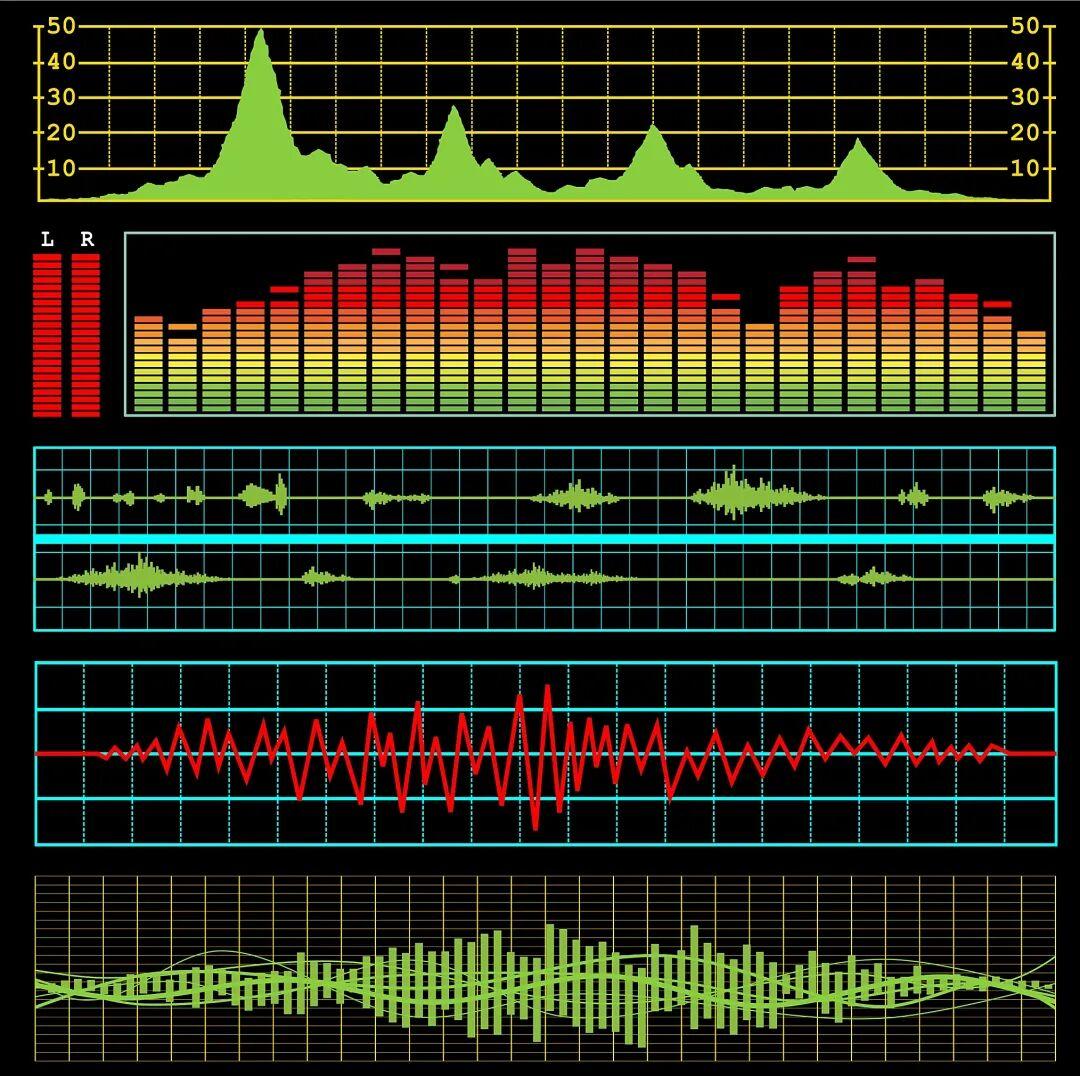
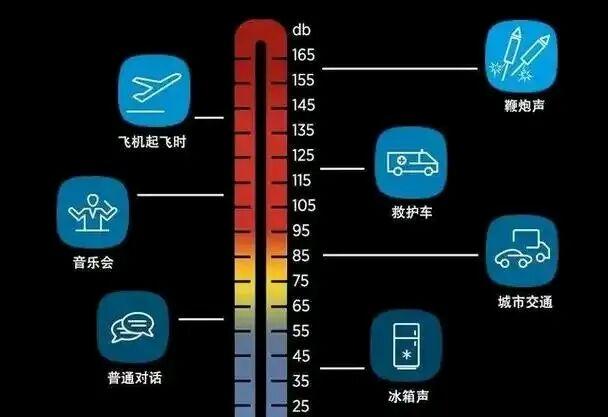
In wireless communication, radar, and microwave power transfer, you constantly see dB, dBm, and W. The distinction is simple: W and dBm describe how much power there is, while dB describes how much the power changed.

Antenna gain is commonly written as dBi or dBd. Both are relative values, but they use different references: dBi is measured against an isotropic radiator, and dBd is measured against a dipole antenna. The conversion is dBi ≈ dBd + 2.15. A 16 dBd antenna, for example, is about 18 dBi.
Why Engineers Cannot Work Without dB
- Compact expression: it compresses very large or very small numbers into readable values.
- Simpler math: it turns multiplication and division into addition and subtraction, which speeds up engineering calculations.
- Wide applicability: it spans acoustics, communications, electronics, and many other fields.
- Intuitive reading: a positive or negative sign shows direction, and the magnitude shows how large the change is.
Whether you are listening to music, tuning equipment, or designing a communication system, dB is an indispensable logarithmic helper. Once you understand it, reading datasheets, optimizing systems, and even shaping your own signal world becomes far easier.
How to Calculate Antenna Length from Wavelength
In radio communication, antenna length directly determines transmit and receive efficiency. Many hobbyists fall into the trap of assuming longer is always better, but the real rule is that the right length performs better. The core goal of choosing an appropriate antenna length is to lower the voltage standing wave ratio (VSWR) and thereby raise communication efficiency.
The core principle: wavelength. To find the ideal antenna length you first need the wavelength (λ). The formula is simple: λ = c / f, where λ is in meters, c is the speed of light at roughly 3 × 10^8 m/s (about 300,000 km/s), and f is the frequency in hertz.
Length for common antenna types. Once you have λ, multiply by the proportion that matches the antenna structure:
| Antenna type | Ideal length | Typical use |
|---|---|---|
| Quarter-wave vertical | λ/4 | Compact handheld and mobile radios working against a ground plane |
| Half-wave dipole | λ/2 | Reference antennas, balanced feeds, and stacked array elements |
| Five-eighths-wave vertical | 5λ/8 | Higher-gain mobile and base-station verticals |
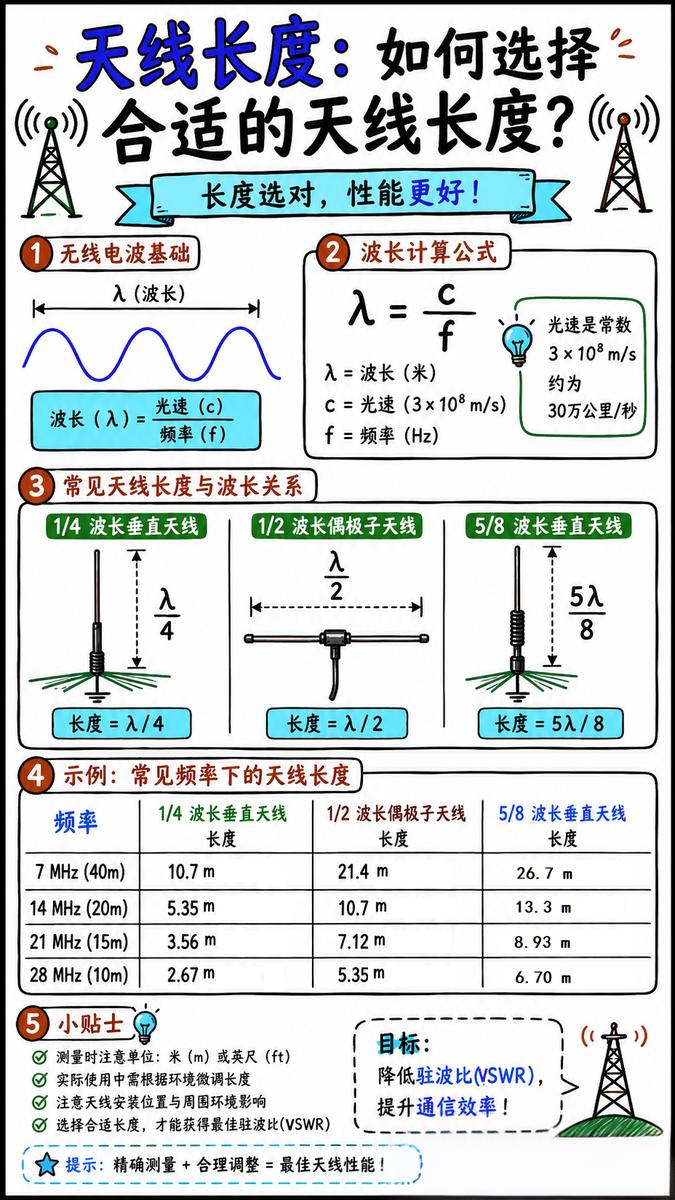
Practical caveats. The theoretical calculation is only step one. When you actually build an antenna, keep these details in mind. First, keep units consistent — be careful to work in meters or feet while measuring and cutting. Second, environment matters: the mounting position and surroundings such as buildings and trees shift the resonant frequency. Third, fine-tune on site: real installations almost always need small length adjustments to reach the best VSWR. Accurate measurement plus sensible adjustment equals the best antenna performance.
Why a Passive Antenna Has Gain
Gain is one of the most striking characteristics of an antenna, and it raises an obvious question: an antenna is a passive device that does not amplify signal power, so why does it have gain at all? Antenna gain describes the ability to concentrate radiated power in a specified direction. In effect, the antenna sacrifices radiation in other directions to strengthen the signal in one direction, much like replacing a bare bulb with a flashlight: the total energy is unchanged, but a reflector focuses the light into a beam that reaches farther.
Antenna gain is formally defined as the ratio of the signal power density produced by the real antenna to that produced by an ideal radiating element at the same point in space, for equal input power. It quantifies how well an antenna concentrates its input power, and in communication terms it measures how strongly the antenna produces a signal in a given direction and range. The higher the gain, the stronger the ability to concentrate energy in a specific direction.
Gain is usually measured by comparison. First, feed a known power into an ideal point-source antenna and measure the received power P1 at a specific distance. Then swap in the antenna under test, apply the same power, and measure the received power P2 at the same position. The gain follows from G = 10·log(P2/P1).
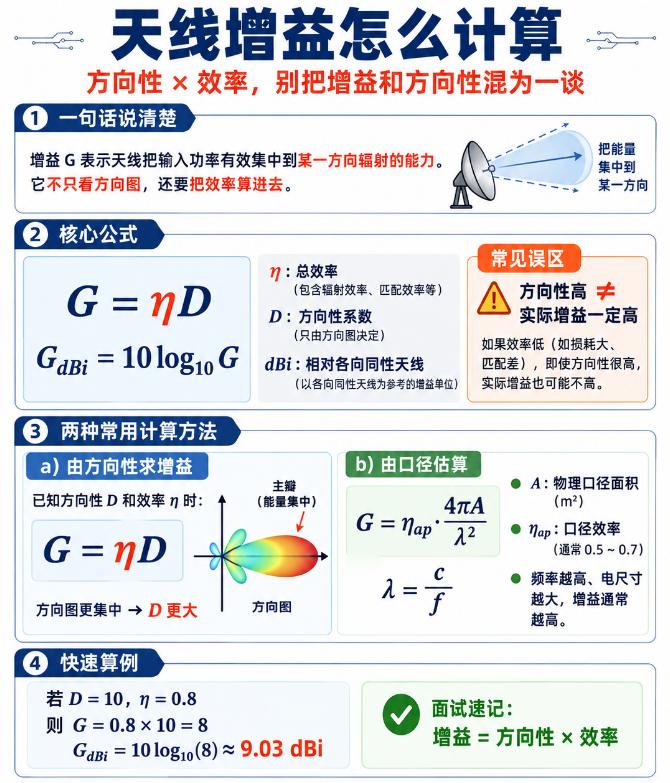
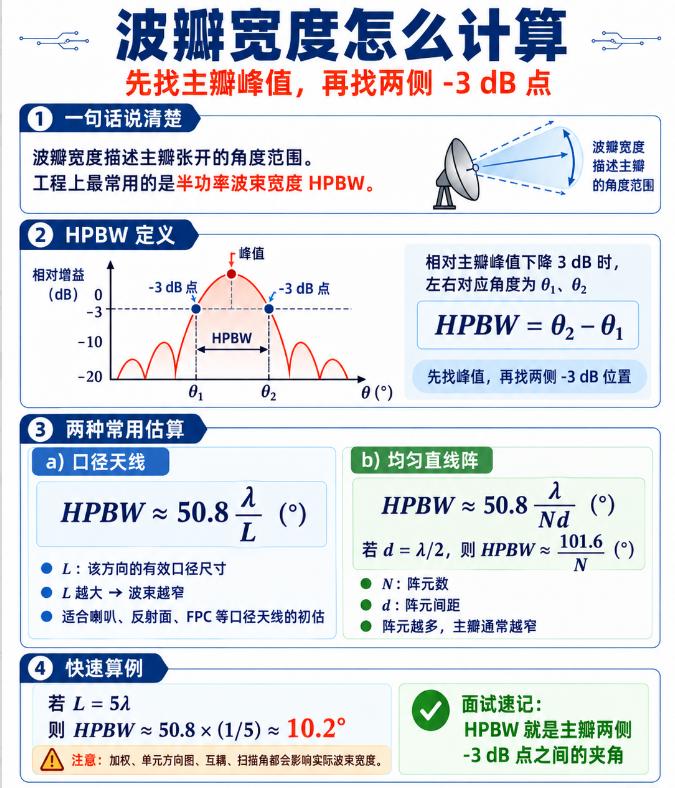
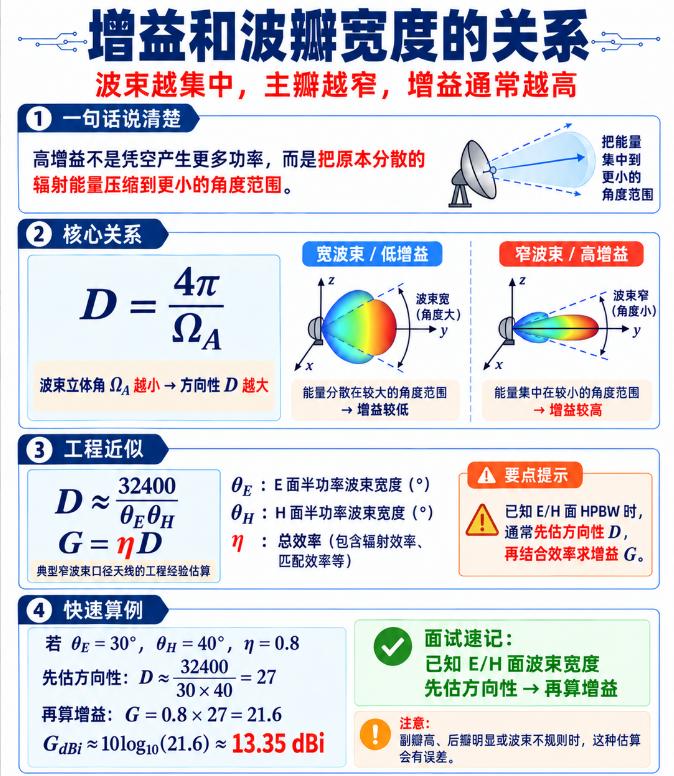
Two points are essential to understanding antenna gain. First, as a passive device the antenna does not increase power; it only redistributes energy. Second, antenna gain is a relative value measured against a reference antenna, most commonly an ideal point source or an isotropic radiator.
How to Increase Antenna Gain
Raising antenna gain mainly means narrowing the vertical radiation lobe while keeping the horizontal pattern omnidirectional. Several techniques achieve this.
Increase the antenna size. This is the most direct approach. For a parabolic dish, the approximate gain formula is G (dBi) = 10·log{4.5 × (D/λ0)²}, where D is the dish diameter and λ0 is the center operating wavelength. A larger aperture means higher gain.
Use an antenna array. Arranging multiple elements in a regular pattern lets electromagnetic waves add in phase in a chosen direction, strengthening the field there. Stacking four half-wave dipoles vertically into a four-element array, for example, raises gain from 2.15 dBi for a single element to about 8.15 dBi.
Apply smart antenna and MIMO techniques. Smart antenna systems combine multiple elements into an array and send the same data to a user, concentrating radiated energy in one direction to raise effective gain. In real projects, choosing antenna gain means balancing coverage requirements, equipment size, and installation environment. A high-gain antenna extends coverage distance, but it also narrows the beam, so it must be aimed precisely.
Have questions about this article? Feel free to contact us at [email protected] — we’re happy to help!
Frequently Asked Questions
What is the difference between dB and dBm?
dBm is an absolute unit that expresses a power level referenced to 1 milliwatt, while dB is a relative unit that expresses a change in power. A 10 dB increase means the power became ten times larger, and 30 dBm means 1 watt.
How do you calculate antenna length?
Start with the wavelength, λ = c/f, using 3 × 10^8 m/s for the speed of light. Then multiply by the proportion your design requires: λ/4 for a quarter-wave vertical, λ/2 for a half-wave dipole, or 5λ/8 for a five-eighths-wave vertical.
What is the difference between dBi and dBd?
Both express antenna gain relative to a reference, but dBi uses an isotropic radiator and dBd uses a dipole. Because a dipole already has 2.15 dB of gain over an isotropic source, the conversion is dBi ≈ dBd + 2.15.
Why does a passive antenna have gain?
An antenna does not amplify power. Gain describes how well it concentrates radiated energy in one direction by sacrificing radiation in others. It is a relative figure, always measured against a reference antenna such as an isotropic radiator.
Is a longer antenna always better?
No. Length must match the wavelength and the design type. The real goal is a low VSWR, and an incorrect length raises reflected power. Installation surroundings such as buildings and trees also shift the resonant frequency, so on-site fine tuning is usually required.
About Aomway
Aomway is a technology company specializing in drone and FPV equipment, publishing in-depth analyses of motor control, embedded hardware, and open-source robotics projects. With over 15 years of industry experience, Aomway covers the full spectrum from flight controllers and FPV goggles to thermal imaging cameras and long-range datalinks for the global drone community.